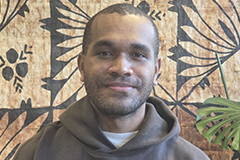
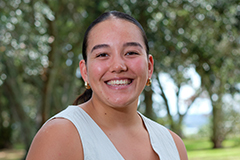
Jerry Wells Hagaria
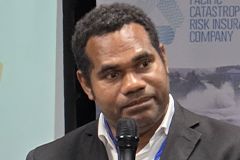
Chief Operations Officer, National Disaster Management Office, Honiara, Solomon Islands
Master of Disaster Risk Management and Development
Graduate Diploma in Health Science
What he loves most about his work is the opportunity to serve people when they need help the most, says Jerry Wells Hagaria who is now the chief operations officer at the National Disaster Management Office of the Solomon Islands Government.
“I support the coordination of disaster preparedness, emergency response, humanitarian assistance, logistics operations and recovery efforts across the country. My role requires me to work closely with provincial disaster offices, government ministries, humanitarian partners and local communities to ensure that timely and effective assistance reaches people affected by disasters. My work also involves planning, coordination, reporting and supporting the management of national emergency operations.
“Whether responding to a tropical cyclone, drought, flood, tsunami, earthquake or other emergency, I find great purpose in knowing that the work we do directly impacts the lives of vulnerable communities. I enjoy the challenge of bringing together different stakeholders, coordinating resources and finding practical solutions during complex situations. Every disaster is different, but the common goal is always to help communities recover and become more resilient. Seeing communities receive assistance and begin rebuilding their lives is the most rewarding part of my job.”
He is proud of being able to dedicate his career to public service and building a more resilient Solomon Islands for future generations.
“I’m particularly proud of my contribution to major disaster responses in the Solomon Islands, including the coordination of response efforts during Tropical Cyclone Maila and the ongoing national drought response. These operations required extensive coordination with government agencies, provincial authorities, humanitarian partners and communities to assess impacts, mobilise resources and deliver assistance to affected populations. I’m also proud of helping strengthen national disaster management systems through the development of emergency procedures, disaster response plans, simulation exercises, training programmes and coordination mechanisms that improve the country's readiness for future disasters. Furthermore, I take great pride in mentoring and supporting disaster management personnel at both national and provincial levels, helping to build a stronger and more capable disaster management workforce for the Solomon Islands.”
Gaining valuable insights
Jerry – who came to AUT as an international student from the Solomon Islands, supported by a Manaaki New Zealand Scholarship – still has fond memories of his time at AUT in New Zealand.
“I completed my studies in 2022, and one of the courses I particularly liked was the disaster and development course, which focused on recognising the interconnection between development and disasters of all scales. The readings for this paper were enlightening. Another very interesting course focused on building resilient communities, critically analysing the concepts of resilient communities and sustainable development within the context of emergency and disaster management. One important insight I gained from this course was the importance of putting people at the centre of development and recognising their capacities. This really got me thinking about my practice and the communities we’re responsible for.”
For his master’s degree research, he explored the integration of traditional knowledge in disaster risk management and climate change adaptation policies and practices. His research was supervised by Associate Professor Loic Le De and Associate Professor Ailsa Holloway.
“I chose this topic because through experience I’ve learnt that traditional knowledge is important for communities’ resilience, especially in the Solomon Islands. However, the introduction of relief aid can make it difficult for the country to maintain such traditional knowledge. I therefore wanted to find out how government and non-governmental organisations incorporate traditional knowledge in their policies and practices, why this knowledge has been disappearing and how it can be restored.”
Advice for other students
Jerry has some great advice for other students.
“I’d advise international students who want to undertake disaster risk management or climate change programmes to consider AUT. The disaster risk management and development programme at AUT is very relevant and up to date, and you can choose from courses across the fields of disaster risk management and public health. The lecturers are very supportive and committed to helping you graduate. I was grateful to study at AUT.”
There is plenty of support available if you need it, he adds.
“I joined AUT without having done a bachelor’s degree and was first admitted to the Graduate Diploma in Health Science before undertaking postgraduate study. To make things even more complicated, English is my second language. But fortunately, AUT has a lot of learning support available. The library staff are very helpful and have helped me find books for my assessments, and the library workshops were very relevant. The lecturers have also been very supportive – they seemed to understand my challenges and always promptly responded to my queries.”