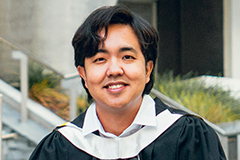
Agha Muhammad Ahya
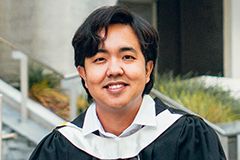
Operations and Maintenance Engineer – Geophysical Instruments, Indonesian Agency for Meteorology, Climatology and Geophysics, Jakarta, Indonesia
Master of Engineering with Honours (First Class)
He enjoyed that the Master of Engineering included a strong emphasis on hands-on learning and industry engagement, says Agha Muhammad Ahya who came to AUT as an international student from Indonesia, supported by a Manaaki New Zealand Scholarship.
“Academically, I had the opportunity to do actual hardware design projects in the advanced IoT course. I also gained practical experience using industry-standard software, particularly in the power system quality management course. Beyond the classroom, I had several opportunities to go on industry visits and attend sharing sessions with engineering professionals, which were excellently facilitated by the AUT IEEE student branch. They gave me invaluable insights into current industry standards and expectations, while also helping me build a strong professional network.
“I appreciated the world-class facilities and the highly experienced, professional lecturers at AUT. The university has a wonderfully diverse environment and incredibly supportive staff. On top of the excellent academics, the AUT recreation centre was a fantastic place for me to exercise and refresh my mind after a long week of work and studying.”
There were several AUT staff whose support throughout his studies he particularly appreciated.
“I received tremendous support from several remarkable individuals during my time at AUT. First, I would like to express my deep gratitude to George Kimani, Sacha Pointon, Petrina Hibden and Prerna Taneja from the Scholarship Office. They were incredibly helpful and went above and beyond, providing support not just with my academic needs, but also in helping me navigate and settle into my life in Auckland. Furthermore, I owe a great deal of thanks to my supervisor, Dr Ramon Zamora. His guidance, expertise, and continuous encouragement were instrumental in helping me successfully complete my dissertation.”
Protecting communities across Indonesia
After graduating from AUT in 2025, Agha has now returned to Indonesia where he works as an engineer for the Indonesian Agency for Meteorology, Climatology and Geophysics in Jakarta.
“What I enjoy most about my role is the profound impact of the work. I specifically focus on maintaining geophysical equipment, particularly the Indonesia Tsunami Early Warning System. Knowing that the hardware and sensor networks I maintain are directly responsible for saving lives and protecting communities across Indonesia gives my daily technical tasks a very strong sense of purpose. It’s incredibly fulfilling to use my engineering skills for something of such critical national importance.”
Studying in AUT’s diverse environment had an unexpected benefit for his soft skills and professional adaptability, he says.
“I was originally very focused on the technical aspects of my master's degree. However, engaging with a highly diverse student body and being part of the Manaaki New Zealand Scholarship community significantly improved my communication and collaboration skills. I learned how to adapt to new environments and work alongside people from various backgrounds. This has been incredibly beneficial in my role at the Indonesian Agency for Meteorology, Climatology and Geophysics, where coordinating the operations and maintenance of critical systems like the Indonesia Tsunami Early Warning System requires effective teamwork and clear communication across different divisions.”
Advice for other students
Agha has some great advice for other students who are only at the start of their own university journey.
“Try to make the most of the practical projects and don't hesitate to connect with your lecturers. For me, taking the time to build a good relationship with my supervisor made a huge difference, as their real-world insights were just as valuable as the classes themselves.”
He also has guidance for those interested in a career similar to his.
“I've learnt that working with critical infrastructure requires a lot of patience and attention to detail. Whenever the technical challenges get tough, I find it really helps to remember the human impact behind the technology – it keeps you grounded and gives your work a genuine purpose.”