Astad Kapadia
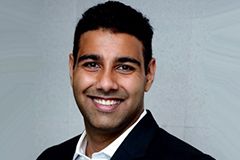
Head of Connections and DSO Services, Counties Energy
Master of Business Administration with Distinction
Master of Engineering with Honours (First Class)
Bachelor of Engineering (Honours) in Electrical and Electronic Engineering (First Class)
Astad Kapadia has built a career at the forefront of New Zealand’s changing energy sector, combining engineering expertise with a strong understanding of business. But when he left school, he didn’t yet know where that career would take him.
“I knew I was good at maths, physics and business, and I was guided towards engineering. AUT stood out because it offered a more practical, career-focused pathway than the alternatives, including an industry placement. Later in my career, I hit a ceiling in business conversations: I couldn’t contribute as confidently as I could in engineering discussions. That’s why I pushed on to complete an MBA.”
He thoroughly enjoyed his studies and still has fond memories of both his engineering degrees and his MBA.
“I loved learning and discovering the subject matter. Great lecturers, teaching assistants and fellow students helped me understand topics far more deeply than I would have on my own. The projects let me build something real and see it work. In my bachelor’s degree, I built a TV transmitter and receiver and displayed pictures on a TV. In my fourth year, I developed a smart street lighting system as an industry project with Auckland Transport. The industry project was a highlight, and it led directly to my first job as a graduate. In my Master of Engineering, I designed, simulated and tested solutions for high penetration of solar PV while working at Vector, which has become highly relevant in my career.
“My MBA was the next big one: it led to a promotion and a major step up in my responsibilities. Balancing study and full-time work left little time for campus activities, but the library, academic resources and lecturers’ teaching aids helped me get the most out of my university experience. In my MBA, I focused on how electricity distribution businesses can build a distribution system operator (DSO) capability, while working for my current employer, Counties Energy. This complements my master’s degree research and adds a business lens.”
Shaping the future of energy
Now working as the head of Connections and DSO Services for Counties Energy, Astad loves the impact he can make through his work.
“In my role, I directly influence commercial, regulatory and engineering decisions, and create value for the company, the industry and our customers as New Zealand moves towards electrification.”
He’s particularly proud of the innovative projects he has helped bring to life and the opportunity to influence the future of the energy sector.
“I’ve built New Zealand’s first DERMS (distributed energy resource management) platform, helped develop new flexibility services for electricity customers, and grown OpenLoop, an EV charging platform for public and enterprise charging. I’ve won and delivered multi-million-dollar EECA-funded projects, including the Karaka Harbourside Smart Energy Pilot and Urban V2G Pilot. My Mercer second-life battery project won the Innovation in Energy Award, and I’ve contributed to industry standards, guidelines and policy through ENA working groups and directly influenced the Electricity Authority and EECA through expert panels.”
Advice for other students
Astad – who is proud of receiving a Dean’s Award while studying engineering and of being invited into the Beta Gamma Sigma business honours society – has some great advice for other students who are at the start of their own university journey.
“Don’t worry if you don’t have it all figured out. Follow what you’re good at and take every chance to build something practical, because projects teach you more than lectures alone. Lean on your lecturers, tutors and classmates. Understanding a subject deeply is worth more than just passing it.”
He also has some great guidance for those interested in a career similar to his.
“If your degree includes workplace experience, take it seriously as it can become your first job. Learn to go back to first principles and keep learning after you graduate. The energy sector is changing fast, and people who combine technical depth with commercial and regulatory understanding are in high demand. Don’t be afraid to take on work that stretches you.”