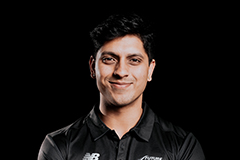
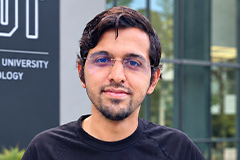
Ahsan Ilyas
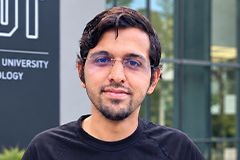
Doctor of Philosophy candidate
He chose to do a PhD in sport and exercise to build on his clinical experience and develop the research skills to address important problems in sport rehabilitation, says Ahsan Ilyas who came to AUT as an international student from Pakistan.
“My clinical background as a musculoskeletal physiotherapist has strongly influenced my decision to pursue research in sport and exercise, particularly in the area of rehabilitation and return to sport. As a musculoskeletal physiotherapist, I’ve worked with people recovering from musculoskeletal and orthopaedic injuries, including athletes returning to sport. This experience made me particularly interested in understanding not only the physical aspects of rehabilitation, but also the psychological factors that can influence recovery and return to sport. The PhD gives me an opportunity to combine my clinical physiotherapy background with research and contribute evidence that can ultimately improve rehabilitation outcomes for athletes.
“I chose AUT because of its strong reputation in sport and exercise research and its focus on applied research that can have a real-world impact. The research environment at AUT, particularly through the Sport Research Institute New Zealand (SPRINZ), was very attractive to me because it provides an opportunity to work alongside researchers with expertise across sport, exercise, rehabilitation and performance. I also felt that AUT was the right environment for me to develop as an independent researcher while continuing to build on my clinical background as a physiotherapist.”
For his PhD research, he is focusing on psychological interventions following ACL reconstruction in athletes, with a particular interest in how psychological factors can influence rehabilitation, movement quality and return to sport. His research is supervised by Professor Patria Hume and Dr Tony Oldham from AUT, and Dr Catherine Bacon from the University of Auckland.
“ACL reconstruction rehabilitation is often approached primarily from a physical perspective, focusing on strength, movement and functional recovery. However, athletes can also experience psychological barriers during rehabilitation, such as fear of movement or reinjury and reduced confidence in returning to sport. My research aims to better understand the role of psychological interventions in this process and how they may contribute to better rehabilitation and return-to-sport outcomes. Ultimately, I hope this research can help clinicians take a more holistic approach to rehabilitation, bringing together physical and psychological aspects of recovery rather than treating them as completely separate components.”
Developing as a researcher
Ahsan says the PhD has given him the opportunity to look at rehabilitation from a much broader research perspective.
“What I’ve enjoyed most is being part of a research environment where I can learn from people with different areas of expertise and continuously challenge my own thinking. I’ve particularly enjoyed developing my research skills, critically evaluating scientific evidence and thinking about how research findings can be translated into clinical practice. I also value the supportive research environment at AUT and the opportunity to connect with people who share an interest in improving sport, exercise and health outcomes.
“One of the things I didn’t fully appreciate before starting my PhD was how much a research degree would challenge me to think beyond simply finding answers. AUT has given me the opportunity to develop as an independent researcher, critically question existing evidence and think about how research can solve practical problems in sport and rehabilitation. One of the achievements I’m most proud of is progressing from a clinical physiotherapy background into doctoral research in sport and exercise at AUT. My PhD has enabled me to develop my research expertise while continuing to build on my experience as a musculoskeletal physiotherapist. I’m particularly proud of contributing to research that aims to improve rehabilitation and return-to-sport outcomes for athletes.”
He is enjoying being based in Auckland for his studies.
“I’ve really enjoyed the combination of studying in a strong research environment and living in Auckland, which is a diverse and active city. Auckland provides a great balance between academic life and opportunities to stay connected with sport, exercise and the wider community. Coming from an international background, I’ve also appreciated the multicultural environment and meeting people from different backgrounds.”
Advice for other students
Expecting to complete his PhD in 2027, Ahsan has some great advice for other students who are considering doctoral study.
“My advice would be to stay curious, be consistent and make the most of the opportunities around you. A PhD is a long journey, and there will always be challenges along the way. It’s important not to focus only on the final outcome, but to appreciate the learning that happens throughout the process. Make connections with your supervisors, researchers and fellow students, ask questions and don’t be afraid to step outside your comfort zone. Your previous experience is valuable, but being open to learning new things can make the journey even more rewarding.”
He would highly recommend the PhD in sport and exercise to others who want to contribute to improving sport, exercise and rehabilitation.
“AUT provides a supportive research environment, access to expertise across different areas of sport and exercise, and opportunities to develop the skills needed to become an independent researcher. For someone coming from a clinical background like mine, it has been particularly valuable because it provides an opportunity to connect clinical experience with research and work towards evidence-based improvements in practice.”