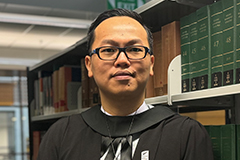
Kin Wang Ngai (Martin)
Bachelor of Health Science in Health Management
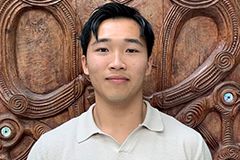
He chose the Bachelor of Health Science in Health Management to bridge the gap between healthcare and business strategy, says Kin Wang Ngai (Martin) who came to AUT as an international student from Hong Kong.
“While clinical pathways like nursing or physiotherapy are vital, I was drawn to the macro-level mechanics – how health systems operate, scale and integrate with commercial realities. Loving both business models and health topics, this degree allowed me to merge those passions perfectly. AUT was the definitive choice for me because of its focus on applied, real-world learning. Compared to traditional, theory-heavy academic models, AUT prioritises turning students into industry-ready professionals.”
He considers the practical components of the Bachelor of Health Science in Health Management to be instrumental in shifting his mindset from theoretical to operational.
“Rather than just reading textbooks, we actively analysed real-world disease case studies, conducted clinical site visits to see healthcare delivery in action and engaged deeply with Māori health frameworks. What I gained from these opportunities went far beyond academic grades. The clinical visits and case studies have given me a panoramic view of how complex health systems function under pressure, alongside a strong grasp of human anatomy and patient autonomy.
“Crucially, the focus on Māori health models provided me with a profound understanding of the cultural background of Aotearoa New Zealand. It taught me that health and safety are holistic, encompassing physical, mental, spiritual and family wellbeing. This cultural competence and systemic insight have become foundational to how I manage risk and look after people in my professional career today.”
Stepping out of his comfort zone
The absolute highlight of his time at AUT was stepping completely out of his comfort zone, Martin says.
“Through my involvement in the AUT Edge Award and its structured volunteer work, leadership development and career workshops, I was challenged to look beyond the classroom. This ecosystem allowed me to take the theoretical knowledge from my lectures and immediately stress-test it in reality, building a pragmatic toolkit that prepared me for the actual workforce. Coming to New Zealand as an international student, volunteering was a completely foreign concept to me; it wasn't something I had ever considered back home. However, I viewed moving to a new country as the perfect catalyst to challenge myself and try something entirely different.
“That single decision had a massive impact on my self-development. It forced me to shed any hesitation, building a deeply proactive attitude and the confidence required to initiate connections with complete strangers. More than just a great experience, it served as my ultimate bridge into understanding the 'Kiwi lifestyle' and cultural nuances. Learning how New Zealanders communicate, collaborate and build community in a relaxed, yet focused environment gave me an invaluable foundation that directly shaped the way I approach teamwork and professional relationships today.”
Having recently graduated and currently pursuing health and safety roles in the construction, waste management and healthcare sectors, Martin had a number of proud achievements throughout his time at AUT.
“I’ve had several achievements at AUT, including completing the AUT Edge Award, and receiving the AUT Edge Top Reflection Award and being selected as one of the top three students in the Hiring Ready Programme 2025. I was also awarded an AUT Green Impact Competition Platinum Certificate and a Certificate of Completion for successfully completing the Create Confidence and Connection programme.”
Advice for other students
Martin has some great advice for other students who are only at the start of their own university journey.
“My biggest advice to students is to say 'yes' to every opportunity that comes your way outside of the standard curriculum. Let's be realistic: in today’s rapidly evolving world driven by AI technology, technical facts and theories can be learned online by anyone with an internet connection. What you can’t learn through a screen are human-centric traits: collaboration, adaptive communication, real-time leadership and high-pressure problem-solving.
“University is a safe sandbox to test your limits. Don’t just attend lectures and go home. Put your hand up for workshops, join the student initiatives and get involved in projects. These experiences don't just equip you with the soft skills employers actually look for; they become the most defining, memorable milestones of your entire life.”
He also has some specific tips about internships.
“Be intentional and strategic about where you choose to do an internship. Breaking into the industry after graduation is notoriously the most challenging hurdle because so many modern entry-level roles demand prior experience or specific technical exposure. Your internship is your bridge over that gap. Don't just wait for internships to be advertised on job boards. If there’s a specific company you want to work for, reverse-engineer the process. Find their contact details, reach out directly, and ask if they have internship or volunteer vacancies. New Zealand companies highly value proactive individuals who are willing to contribute. Volunteering your time or securing an internship through cold outreach is a massive differentiator that can launch your career months ahead of everyone else.”