Aziz Al Sa’afin
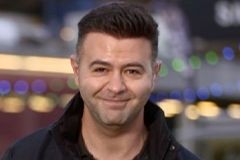
1News Reporter, TVNZ
Bachelor of Communication Studies
He is proud of the range of work he has been able to do, and grateful to the people who have trusted him with those opportunities, says Aziz Al Sa’afin, a familiar face for anyone watching 1News.
“I love getting out into communities, talking to someone I might otherwise never have met and learning something I didn’t know that morning. I often remind myself about how these people let us into their lives, sometimes during incredibly difficult moments, and trust us to tell their stories with care. That’s a privilege and a huge responsibility, and when I became a journalist, I promised myself I would never lose sight of it. The stories I’m proudest of are the ones where someone feels we’ve done their experience justice. The big assignments are memorable, but that trust is what stays with me.
“My background shapes what I bring to the job because we all have different lived experience that shapes how we tackle certain things. As someone from a refugee family and an openly gay broadcaster, I know representation matters. I want people from all sorts of backgrounds to see a place for themselves in this industry. I also love the creativity. Working as a video journalist in a previous role meant shooting and editing alongside writing, reporting and presenting. Being able to draw on all those skills keeps the work varied – and keeps me challenged and learning.”
His career has already taken him across different roles and countries.
“After working for Pickled Possum Productions on Sticky TV, I became a setup producer for Rachel Smalley on Firstline before transitioning to the job of roving reporter for the original Paul Henry Show. I then went on to reporting and presenting roles that took me around the world, covering stories in places I never imagined I’d reach as a kid from a refugee family.
“At TVNZ, I helped develop social and digital content before becoming Australia correspondent, based in Sydney. That role brought some of the biggest and most challenging assignments of my career, including the mushroom murder trial, the Bondi Junction stabbings and the Wakeley terror attack. There were also a few ‘how is this my job?’ moments – from spending weeks embedded with the New Zealand Defence Force in the Australian wilderness to interviewing Ariana Grande or Nicole Kidman. Since returning to New Zealand, I’ve loved getting stuck into investigations and longer-form storytelling. That includes marking 40 years since homosexual law reform by speaking with some of the people who helped make it happen. As a gay man, that was especially meaningful.”
The versatility to succeed
Looking back at his time at AUT, one of the biggest benefits was having the opportunity to explore different areas of the communications industry, says Aziz who graduated with a Bachelor of Communication Studies in 2010, supported by an AUT Significant Student Scholarship.
“I’ve always loved television and film. When I told my mum I wanted to become a journalist, she revealed she had also been one too. Apparently, it runs in the family! AUT gave me room to explore different parts of the industry, from radio and journalism to television and film, PR and even philosophy. Today, I write, report, present, shoot and edit, and think about how a story might work on television, online or on a streaming platform. That matters in an industry where technology, audiences and the ways we tell stories keep changing. Having a broad set of skills gives me more ways to contribute and the confidence to try something new. Just as valuable was learning to work with other people. Knowing how to listen, take feedback and help someone else’s idea succeed has been every bit as useful as knowing how to operate a camera.”
The people and practical experiences were highlights of his time at AUT.
“I had incredible classmates and lecturers, many of whom I’m still in touch with today. One conversation quite literally changed the direction of my career. A guest lecturer came in to speak, I stayed behind to chat, and that led to work experience at Sticky TV and Pickled Possum Productions. By the second half of my second year, it had become my first full-time job in the industry while I was still studying full-time. My lecturers helped me juggle work with lectures, tutorials and assignments. It was a lot, but having people who recognised the opportunity and helped me make it work made such a difference.
“We also had opportunities to make our own productions and work on projects with real clients. One highlight was making a documentary for the Department of Conservation about its work on Tiritiri Matangi, which was later used as a resource on the ferries to the island. In my final year, my short film was a finalist in the UNICEF Asia Pacific Film Awards, and I received the TVNZ Graduate of the Year award when I graduated. Alongside the technical skills, I gained confidence, which, now that I think about it, was the biggest win. I learned how to approach people, ask questions, contribute ideas and solve problems when things didn’t go to plan. Those are skills I still use every day.”
Advice for other students
Aziz has some great advice for other students who are dreaming of a career in communications and the media.
“Have an idea of where you’d like to go, but leave room to surprise yourself. You don’t have to have your whole future figured out before you begin. I certainly didn’t. Honestly, I still don’t. But that’s the beauty with going with the flow, you don’t quite know where you’ll end up! Some of the best opportunities in my career have come from doing something I hadn’t planned on. Learn to shoot. Learn to edit. Learn to write. Try the role you’re less confident in. The more you understand about how things work, the more you can bring to a team and the more options you give yourself.”
Enjoy it, he adds.
“You have people to learn from, equipment to experiment with and classmates to make things with. Ask questions, maybe stay behind after the guest lecture and have that conversation – I’m very glad I did. Be curious, have fun and give yourself permission to create something that might not work the first time. Remember: it’s a safe space! And bring yourself to it. Your background, culture, identity and experiences all shape the stories you notice and the questions you ask. Don’t ever underestimate the value in that.”