Amberleigh-Brooke Faumuina Pouterata Pountney
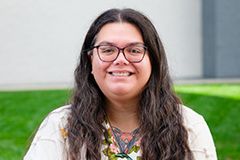
2nd-year student, Bachelor of Arts in New Zealand Sign Language – English Interpreting
When Amberleigh-Brooke Faumuina Pouterata Pountney started learning New Zealand Sign Language, little did she know this would inspire her to return to study and move into a whole new career.
“I studied NZSL casually once a week in adult night classes for three years while I was working full-time. Eventually I ran out of classes to do, but I didn’t want to stop learning the language and felt strongly about wanting to involve it in future career endeavours, so the next logical step was to go to university, and AUT is the only university that offers this NZSL interpreting programme for the entirety of Oceania.
“I’ve always enjoyed learning new things, whether that’s expanding on a subject I already had prior knowledge in or being introduced to something completely new. It would be incredibly fulfilling to support the wonderful Deaf community, especially our Māori and Pasifika Deaf whānau and help them achieve more than they’ve been allowed to believe they can. The more I understand, the more I feel like I can contribute real change for the better for our country. As they say, knowledge is power!”
A new chapter
Returning to study has been an interesting experience, Amber says.
“I previously attended another university straight out of high school, and that ended up being quite a harrowing time. I felt like my high school education didn’t prepare me well enough for the reality of tertiary. The undergraduate experience at AUT has been wildly different. It can get a little bit hand-holdy at times if you’re an older student, but I feel like the guidance here is much more practical, particularly for school leavers. Many core courses help fill in whatever gaps you might not have learnt in high school – or make for a more in-depth refresher if you’re already confident in the basics – and from what I understand, AUT makes a genuine effort to help students find work after their studies, as opposed to simply releasing you into the world with just a thumbs up and a prayer.
“Finding community has been a highlight for me. I was so nervous about returning to study and attempting to restart my career completely over again in something totally different to what I knew. Our degree is very niche, and you get to be quite close to your cohort whether you like it or not. From Orientation week in 2025, even before classes officially started, I found my people and formed what I believe to be lifelong friendships. If AUT never gives me anything else, I’ll be grateful for having found them here.”
She has some great advice for other students.
“For all students, but especially those who are Māori and Pacific, if you need help, it’s there for us. Don’t be afraid to seek it out. You’re good enough for help, you’re good enough to achieve high and you’re good enough for that scholarship. Apply!”
Supported to thrive
There are a few AUT staff who particularly supported her in her studies so far, says Amber who was recently invited into the Amokura Vice-Chancellor’s Leadership Programme for high-achieving AUT students.
“Jana Nee, of Te Pou Māori – Māori student support, was incredibly sweet and helpful when I reached out for cultural support at the beginning of my first year, giving me all sorts of information for Māori ākonga and about AUT’s dedicated whānau room. Rachel Coppage, my Deaf studies teacher, was endlessly supportive in my pursuits, writing wonderful reference letters for both of my scholarship applications. Kathleen Frewen, my Waitangi: Resistance and Repair course tutor, allowed for uncomfortable, difficult discussions in class and let us continue to dissect our class content with her well after class had ended. I’m also grateful to Isabella Rasch, from Vā Pasifika – without her I might not have had the fortitude to go through with the Tulī Takes Flight Scholarship application for not feeling ‘Samoan enough’ for such a scholarship.”
She is also grateful to have been awarded the Sign Language Interpreting Scholarship in 2025 and the Tulī Takes Flight Scholarship in 2026.
“As we all know, the cost of living is at the forefront of most people’s problems right now. Before I was a full-time student, I earned a decent wage, so going from that to a student allowance has been a rough transition. I worried constantly about what I’d do if a costly emergency happened that caught me unprepared.
“More than anything, my scholarships have given me peace of mind, knowing that I can focus properly on my studies to do the best I can, rather than the best I can under difficult circumstances. Knowing that I can potentially graduate university with a much smaller student loan due to the Tulī Takes Flight Scholarship has also lifted my spirits about returning to study in the first place and calmed my thoughts of searching for full-time employment in the future.”