Thai women on the climate change front line
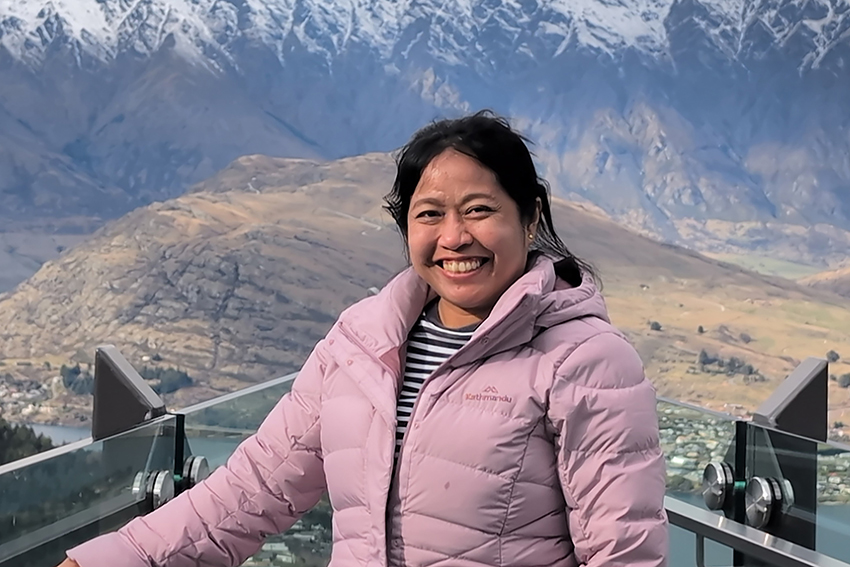
Wilailak Maiwong’s doctoral thesis examines how women in rural Thailand are leading the response to climate change in their region. She highlights how they are among the area’s most important agents of adaptation to increased weather-related challenges.
When people think about climate change, they might picture melting ice caps or rising sea levels. For me, climate change is much closer to home.
Growing up in Thailand’s Isan region, I saw how rural villagers were affected by changing weather. It looked like a farmer waking and starting work before sunrise to avoid the day’s heat. It looked like a grandmother noticing that the rainy season no longer arrives when it used to. It also looked like families wondering whether there will be enough water for their crops.
I heard these observations in everyday conversations. Years later, those conversations brought me back to rural villages in Khon Kaen Province to explore how women experience these challenges, for my PhD.
Women are often described as a vulnerable group when discussing climate change. That is not wrong. Many face economic pressures, limited access to resources, and increasing responsibilities, as changing weather affects farming and household livelihoods.
However, that tells only a part of the story. The research showed women were also among the region’s most important agents of change. While many women had never heard the term climate change, they could clearly describe hotter temperatures, less predictable rainfall, and increasingly difficult farming conditions.
Their understanding came from lived experience rather than scientific reports.
I worked with them and listened to a woman describe adjusting planting schedules as seasonal patterns changed. Another woman explained how prolonged dry periods affected household water supplies, livestock, and food production. Several spoke about rising costs and growing uncertainty about the future.
Rather than waiting for others to solve the problems, they adapted. They changed farming practices: diversifying crops, adjusting daily routines during extreme heat, sharing knowledge through community networks, and supporting one another during difficult periods.
In one village, a community herbal garden was established to preserve traditional knowledge while protecting local resources. In another village, women led non- chemical vegetable farming activities that responded to both changing weather patterns and shifting consumer demand.
These might seem like small initiatives, but they are practical responses developed by villagers themselves. In these two villages, women were often at the centre of those efforts. I met caregivers, village health volunteers, farmers, entrepreneurs, and village leaders whose leadership helped strengthen their communities.
What impressed me most was that adaptation was rarely an individual effort. The research discovered women’s ability to respond to climate change was strongly linked to collective resilience. Family relationships, community networks, local traditions, religious activities, and shared knowledge all helped people respond to climate-related challenges.
But a significant barrier remains. The research revealed climate policies in Thailand are often developed through top-down approaches, with limited opportunities for rural women to participate in decision-making. My research can give them the recognition and confidence that they can act on their own.
So why does this matter? Climate change is one of the greatest challenges of our time. Governments typically focus on large-scale policies and technologies, but my research highlighted the importance of local knowledge and livelihoods. The findings showed the need for policies that support community-based approaches, strengthen local capacity, and recognise women’s contributions to adaptation.
As a woman who grew up in Isan and now works in public policy in Thailand, this research reinforces my belief that some of the most effective solutions come from the ground up. When women participate in decision-making, villages become stronger and have more practical responses to climate challenges.
My research suggests that for climate adaptation policies to succeed, we need to listen to the people facing these challenges every day. That is the most important finding of all.
This article was written by Wilailak Maiwong about their research Collective Resilience: Gender Dynamics and Adaptation to Climate Change in Isan Region, Thailand. It was originally published in the Sunday Star-Times Brainwaves feature. Read the original on The Post.
Useful links
- Read the original research
- Read this article in The Post
- Study social sciences and public policy at AUT
AUT supports the role our academics play as critic and conscience of society, as set out by the Education and Training Act 2020.
Our approach to academic freedom and freedom of expression is set out in our Charter of Academic Freedom which was developed and endorsed by the AUT academic community.