Airborne asbestos in kids’ play sand
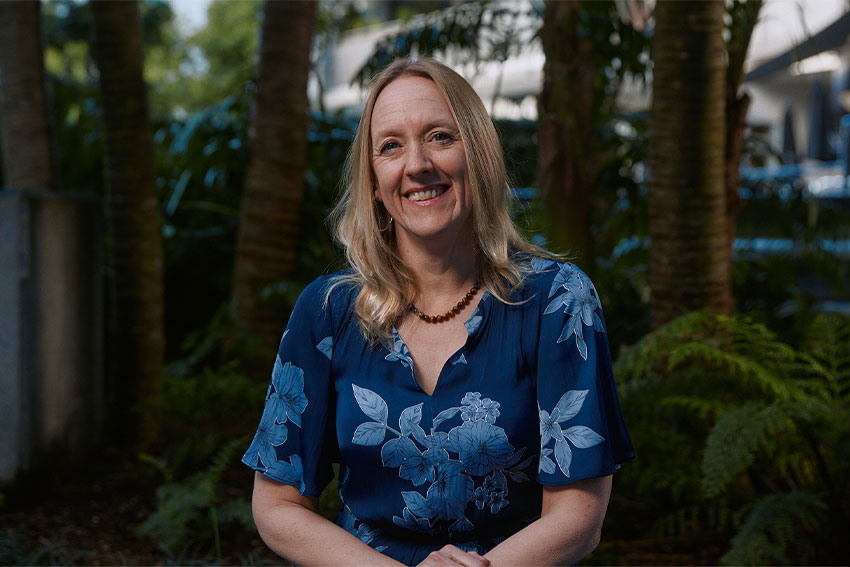
Research led by Auckland University of Technology (AUT) Associate Professor Terri-Ann Berry has found airborne asbestos fibres can be released from samples of children’s play sand previously sold in New Zealand.
In a world-first study, the researchers found tremolite and chrysotile asbestos fibres were released into the air during simulated play activities, from some sand products.
The cancer-causing substance was initially found in products sold in New Zealand and Australia late last year. Since then, it has been detected in play sands in at least 16 countries including the UK, Belgium and the US.
Prior to the AUT study being undertaken, it was not known if the asbestos detected in the children’s products could become airborne during play activities.
Inhaled asbestos fibres can lead to diseases, including cancer.
Although no amount of asbestos exposure is considered safe, not all asbestos exposure will lead to a cancer diagnosis.
The research team has shared preliminary results with public health officials and regulators in New Zealand and Australia. A non-peer reviewed preprint of the study has been published on the ChemRxiv website.
The comments below can be attributed to research lead, Associate Professor Terri-Ann Berry from Auckland University of Technology’s School of Future Environments.
Background
Tremolite and chrysotile asbestos was identified in children's play sand sold in New Zealand previously. Globally, at least 16 countries have issued at least 135recalls or warnings about toys and craft kits made with sand that regulators suspect contain asbestos. In New Zealand, products from 20 different brands have been recalled.
Methods
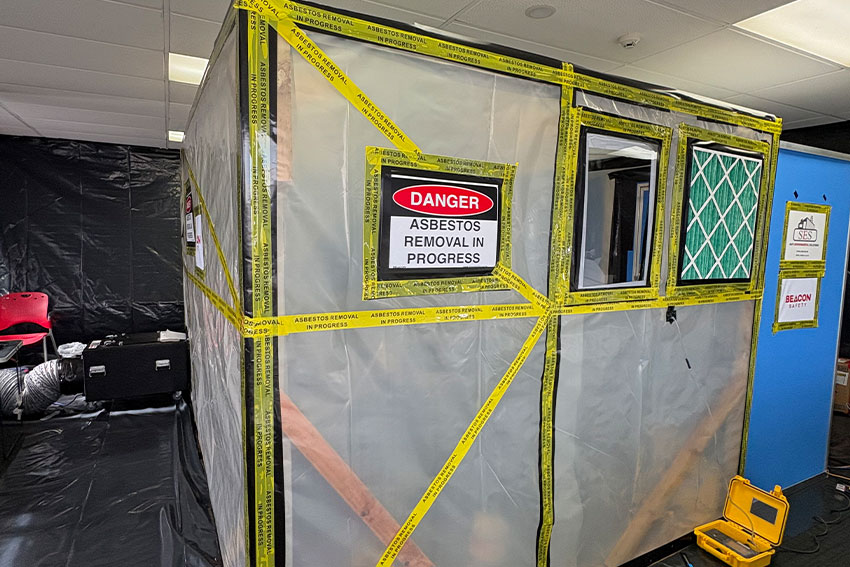
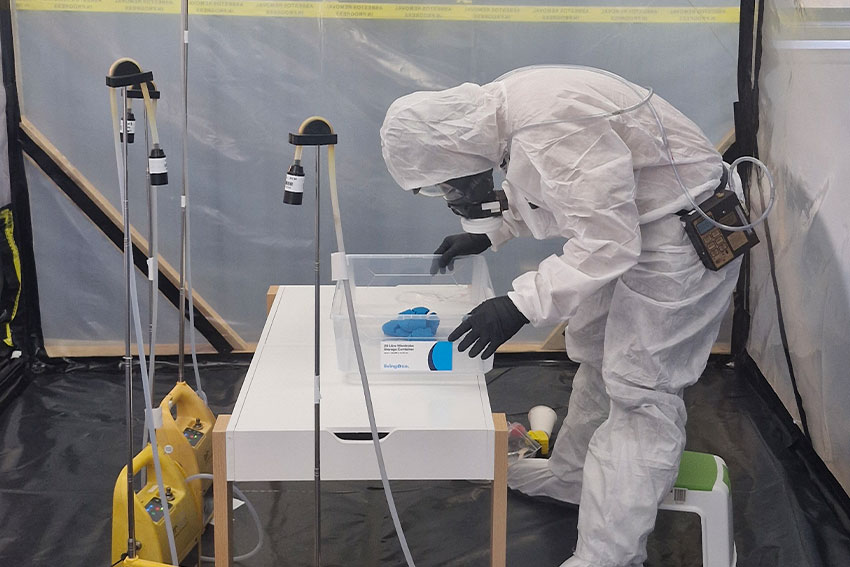
In March 2026, researchers used a licensed asbestos removalist wearing protective equipment (in an asbestos enclosure) to simulate play activities with asbestos contaminated play sand products that had previously been available in New Zealand. You can read more about this testing here.
The research aimed to determine if asbestos fibres would become airborne during these play activities, which were developed based on discussions with childhood educators who previously interacted with the products.
Air samples were collected from three locations during the testing: near the shoulder region of the researcher, 1 metre above the ground next to the table where the simulated play took place, and 1.3 metres above the ground next to the table where the simulated play took place.
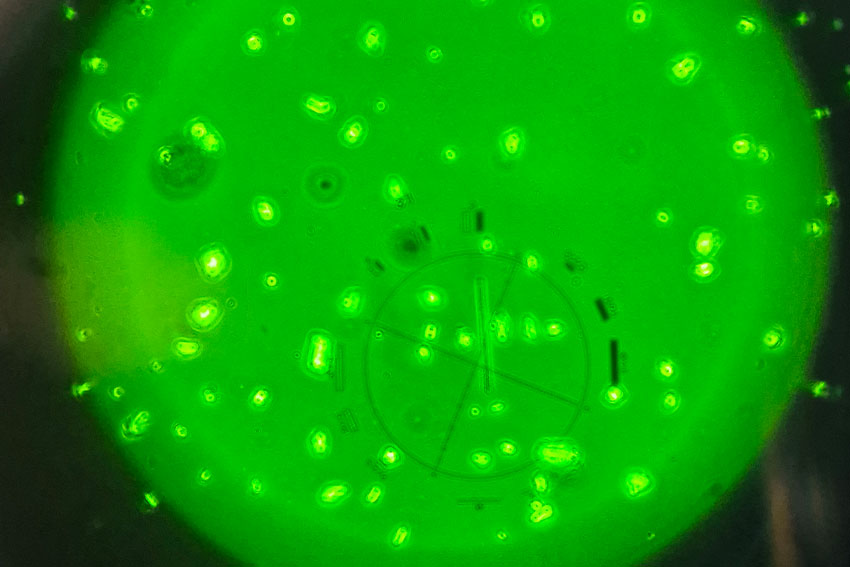
The samples were then sent to an expert analytical laboratory in the US (Eurofins) and to the "G. Scansetti" Interdepartmental Centre for Studies on Asbestos and Other Toxic Particulates of the University of Torino (Italy) for electron microscopy analysis.
Initial Results
The release of tremolite and chrysotile asbestos fibres into the air during simulated play activity was detected by both the US and Italian laboratories in some, but not in all air samples.
Although asbestos fibre release was only found in air samples from tests on craft sands and not those from moulding sands, this is no guarantee that moulding sands do not release asbestos fibres.
It is important to note that the detection limit of this experiment was above what would be acceptable asbestos concentrations for an asbestos clearance test by an asbestos assessor. This means that samples where no airborne asbestos was found should not be considered safe without further testing.
Initial Conclusions
These preliminary results show that under certain conditions some of the tested play sands release tremolite and chrysotile asbestos fibres into the air.
Due to the dusty nature of some play sands, the detection limits of these experiments were relatively high, so absences of asbestos detection cannot be taken as proof of safety.
In addition, the presence of asbestos fibres in a sample cannot be generalised to other sand samples or conditions.
People with concerns over the play sand can contact Healthline on 0800 611 116.
Questions and Answers
Have you tested all withdrawn sand products?
No. As many of the withdrawn products were immediately disposed of, we were unable to access all of the affected products.
Are the sand samples that tested negative safe?
No. Due to the detection limit, lower release rates of asbestos fibres might still be missed. As there is no safe level of asbestos exposure, any exposure to asbestos containing materials can pose a risk.
Was it tremolite or chrysotile asbestos fibres that were found airborne?
Both.
What is the difference between crafting sand and moulding sand?
‘Moulding sand’ refers to products that contain additives causing the sand to clump and hold its shape. ‘Craft sand’ refers to products that behave more like sand you would find at a beach.
How was this research funded?
The research is partially funded by AUT, WorkSafe, the Ministry of Business, Innovation and Employment, the Faculty of Asbestos Management Australia and New Zealand (FAMANZ) and Australia’s Asbestos and Silica Safety and Eradication Agency (ASSEA), with additional support from Beacon Safety, Accurate Consultants, Asbestos Management Consultants (AMC), Safe Environmental Solutions (SES) and Project Consult Limited.
What were the simulated play activities?
Play Intensity | Description of play |
Low | Compressing and pulling, building small mounds and decorating with the toys and flags. Writing and drawing in the sand using fingertip and wooden stick. “Driving” toys through the sand (mimicking cars). The sand is kept mainly within the tray |
Moderate | Scooping up sand with scoop and tipping scoop upside down until the sand falls out, forming small “castles” moulded by the scoops. Tipping and pouring sand into the tray with a spoon/cup. The sand can be played with at a height above the desk. |
High | Crumbling the sand from a high height by rubbing between fingers/hands above the table surface. Use pipes to pour sand down them. Bury toys in the sand and dig them out using the wooden spoon. Create large sand tower using moulds and smash them down again, throwing sand into the air. The sand should leave the tray and be released into the air space above during play. |
What activities resulted in positive results?
Asbestos fibre release was found in air samples from tests at all levels of play intensity (e.g low, medium and high) for craft sands, but not in any of the tested moulding sand samples.
Associate Professor Terri-Ann Berry
Dr Terri-Ann Berry is an Associate Professor at AUT’s School of Future Environments. With 30 years of research experience in environmental science and engineering, she primarily focuses on finding practical solutions to environmental issues that relate to pollution and waste in the construction and demolition sector. She is co-director of the Environmental Innovation Centre and a Fellow of the Royal Society of Chemistry (FRSC) as well as a chartered chemist and environmentalist.
Associate Professor Berry has been researching asbestos for 14 years, including studying exposure pathways, asbestos disposal methods, and bioremediation of asbestos fibres in soil. In 2022, she co-founded the Mesothelioma Support and Asbestos Awareness Trust NZ, of which she is currently Chair.
Useful links
- Preprint: Determination of Asbestos Fibre Release Potential from Contaminated Craft Sand and Sand-Based Toys
- Associate Professor terri-Ann Berry academic profile
- World leading asbestos research at AUT
- Study at architecture and built environment at AUT
- MBIE acknowledges AUT study of asbestos in sand products
- WorkSafe acknowledges the AUT study on asbestos-containing coloured sand
- Ministry of Education statement on AUT research findings on asbestos in play sand
- Ministry of Health response to study of sand products containing asbestos
Dedication
This research is dedicated to Mesothelioma Support and Asbestos Awareness Trust NZ co-founder Leonie Metcalfe, who cared deeply about preventing more asbestos-related disease. Leonie was New Zealand's longest surviving mesothelioma patient and a driving force of the Mesothelioma Support and Asbestos Awareness Trust Charity. Leonie passed away on 16 March 2026.
Media contacts
Susan Strongman
Communications Manager
Mobile +64 21 928 705
Email susan.strongman@aut.ac.nz
Annie Hogan
Communications Manager
Mobile +64 21 725 259
Email annie.hogan@aut.ac.nz
AUT supports the role our academics play as critic and conscience of society, as set out by the Education and Training Act 2020.
Our approach to academic freedom and freedom of expression is set out in our Charter of Academic Freedom, which was developed and endorsed by the AUT academic community.