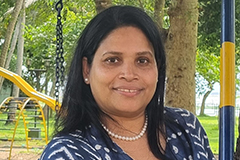
Vicki Fryer
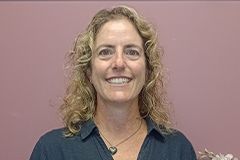
Charge Occupational Therapist, Health New Zealand | Te Whatu Ora Te Tai Tokerau/Northland
Doctor of Health Science
Working rurally as the charge occupational therapist at Kaitaia Hospital, Dr Vicki Fryer says ongoing study has always been important to her professional practice. That motivation eventually led her to AUT’s Doctor of Health Science.
“For me, doing postgraduate study has always been really important to keep connected. That was my way of maintaining professional competence and maintaining that connection. I was actually just looking for a postgraduate course when I saw the doctorate option at AUT, and because it was so clinically focused it piqued my interest. The idea of a traditional PhD has never been on my radar, but the thought of doing applied research and staying connected to what's happening in the health spectrum was very appealing. It was a very personal decision about my professional development to do the doctorate.”
When Vicki first entered the programme, she didn’t yet have a clear research topic but early discussions during her first course and time on campus helped shape her focus quickly.
“I knew that my research would be something to do with older adults and occupational therapy, that's about as much as I knew at that point in time. But at the start of my first on-campus course, I met with my supervisor, Professor Valerie Wright-St Clair, and during these discussions it all fell into place very quickly for me. My research explored the experiences of older adults waiting for community occupational therapy services. Initially it was just about me and what I wanted to achieve, but I soon realised that the research was greater than that, greater than me.
“The findings have shaped the way I think about waitlists and service delivery. It's certainly highlighted that they can't be ignored. In my own department this has contributed to practical changes such as increased triaging and earlier phone assessments, helping ensure people’s immediate needs are addressed while they wait for ongoing support. I’ve also been able to present my research at a couple of gerontology and occupational therapy conferences, which has been really good. I’ve also published a paper in the New Zealand Journal of Occupational Therapy, with another paper in progress.”
A positive experience
For Vicki, the doctorate was a really positive experience, both in her personal and professional development.
“I enjoyed coming down to Auckland for the on-campus courses, and really valued the connections with others. We had interesting guest speakers, and I enjoyed connecting with the other students. I also loved the idea of getting into the university library to look at something for my research. There were always interesting other articles that popped up in those searches. You can see where things are at in the world around you, which you don’t get otherwise.
“I think I was very fortunate with the group of supervisors I had right from the beginning; Professor Valerie Wright-St Clair, Associate Professor Felicity Bright, Dr Jo Conaglen and Dr Margaret Jones (who came on board when Valerie retired). They offered a nice range of opinions and perspectives because all came from such different professional backgrounds.”
While the clinical, hands-on aspects continue to be what she loves most about her work, Vicki says her studies have given her a broader outlook on her profession.
“It's certainly given me that confidence for some of the projects I’m involved in. The courses have given me some leadership knowledge and helped me develop the strength to stand on my convictions.”
Advice for other students
Vicki has some great advice for other students who are considering the Doctor of Health Science.
“The doctorate is a great choice if you're passionate about doing that research. But you do have to be in the right headspace to put that time into it, and I think everybody manages that time differently. I had to chip away at it, doing a little bit every day, which of course might not be the same strategy other people would use. But for me, anything else would have been too stressful with trying to juggle working full-time with my studies. It’s important you feel comfortable and have the right connection with your supervisors. They’re a huge part of making this a positive experience.”
She is grateful for the support and encouragement of her husband and work colleagues throughout her studies.
“My colleagues at work were very supportive. Sometimes they had to pick up things for me because my head was in my research rather than at work, but their encouragement and their interest in what I was doing and what we were finding was motivating. I think it kept them interested as well. I really enjoyed coming home after work and doing my research, but it also meant to give up a few things and change my life for a couple of years. I became more focused. I made sure to spend time with my husband, rather than the natural just blobbing around after work. I made sure to find that time to spend with family and friends.”