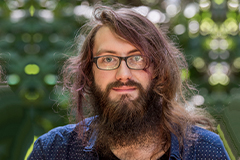
Krisztian Leyser
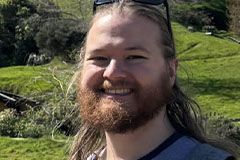
3rd-year student, Bachelor of Medical Laboratory Science
He chose to study a Bachelor of Medical Laboratory Science to progress his career in medical laboratory science.
“Prior to starting this degree, I had worked as a medical laboratory technician for three years. Progression to a scientist involved completion of a two-year part-time bridging course, or completion of the Bachelor of Medical Laboratory Science. I chose to complete the full degree, so that my education would be replete. I also pursued the full Bachelor of Medical Laboratory Science to achieve the grades I feel I’m capable of, and so that I might stand out and make the most of my efforts if I did perform well. Only two universities in New Zealand offer the Bachelor of Medical Laboratory Science, and I chose to come to AUT as Auckland offers better employment prospects, my sister lives in Auckland (and also studied at AUT), and the two senior scientists I worked under as a laboratory technician both recommended AUT for its reputation.”
This decision proved to be the right one, and he has greatly enjoyed being in an environment where his strong performance is fostered and rewarded with opportunities.
“As I’ve engaged with my lecturers, I’ve been commended for my efforts. Where I’ve enquired about opportunities, I’ve found them – even to the point of having my passion for learning recognised in the establishment of a summer research project that I could apply for.
“As someone who was previously a medical laboratory technician, I feel that the context provided by seeing industrial laboratories is invaluable, especially since medical laboratory science covers such a range of disciplines – haematology, immunology, genetics, microbiology, histology, biochemistry, transfusion science, pathology, and cytology. A highlight for me was the New Zealand Blood Service laboratory tour for transfusion science – the tour was fascinating and sparked my imagination of what working for the New Zealand Blood Service could be like. I only wish we had more laboratory tours like this. Occasionally we also have guest lecturers from industry whom we can ask questions.”
Proud achievements
Krisztian has already had a number of achievements he is especially proud of.
“I’m extremely proud and grateful to have been nominated for the inaugural Amokura Vice-Chancellor's Leadership Programme. It was entirely unexpected and has afforded me lessons and opportunities I wouldn’t have received otherwise. The most unexpected opportunity was to meet Helen Clark and Malcolm Turnbull. Of course, this wouldn’t have been possible without my good grades, which I’m proud to achieve and determined to maintain. But my crowning achievement was becoming a teaching assistant as an undergraduate student. It’s a recognition of my performance and a culmination of my efforts, but also a chance to give back to AUT.”
He is grateful for the support he has received throughout his studies so far.
“I’m diagnosed with Asperger’s syndrome, and while I’m ‘high-functioning’, I was pleased by AUT’s proactive action in contacting me to provide support from the commencement of my studies. I didn’t receive this treatment while I studied at another New Zealand university. I didn’t think I’d need any assistance, but the disability student support team suggested some support mechanisms, and I’ve made use of having a less populated room for my tests, which I’ve found helpful.
“I’ve found support virtually wherever I’ve turned. Dr Gardette Valmontes took a chance on me in offering me my first teaching assistant position in the course BIOL500, likewise for Robyn Roberts and Dr Jill Meyer for the course MELS612 in a second teaching assistant position. I consider both Robyn and Jill to be mentors, and I’d call Robyn a great friend. Dr Philip Lopez has been a passionate educator throughout my first and second years. He went out of his way to give encouragement and productive feedback. He was also instrumental in establishing a summer research project for me. Dr Jemilla Kester has been a wonderful educator who I’m glad to have met in my third year. She has been proactive in supporting my inquiries into postgraduate study and was the one to initiate the establishment of the summer project. Sharita Meharry gave me a chance to indulge my learning in med lab in offering a capstone project on clinical scientists. She has commended my engagement with content and has shown she will support those who earnestly engage with the coursework. Hans Tommy has been instrumental in shaping the Amokura programme that provided so many opportunities and lessons.”
A bright future ahead
Expecting to graduate from AUT in 2027, Krisztian already has a good idea how he sees his future after graduation.
“My main career avenue will be to pursue industrial work in medical laboratory science. However, through achieving good grades, and with the support and opportunities my lecturers have provided me, I’ve developed a passion for teaching as well. I’d like to pursue postgraduate studies at some juncture, through which I might be able to enter lecturing to help raise the next generation of medical laboratory scientists.”
He has some great advice for other students who are only at the start of their own university journey.
“Be passionate and be earnest. Give generously with your time and efforts. Always be excellent to others, and cling to those who show they’ll treasure you. Know that your worth is found in a balance of intangible things, not in any single part of your life.”