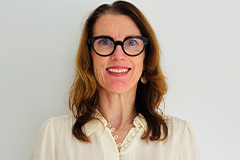
Jane George
Rural Health Workforce Strategist
Doctor of Health Science
Dr Jane George had worked as a social worker and health services manager for many years before deciding to return to study, first through a master’s degree and later through the Doctor of Health Science. That earlier postgraduate experience gave her a taste of research, but it also showed her how isolating advanced study could be when there wasn’t enough structure or support around it.
“I’d worked as a social worker and a manager for a long time, and when I was living in London I decided to do a master’s through Otago. That helped me get my head back into study and gave me my first taste of research, but it also taught me that doing that kind of work on your own was really isolating. There wasn’t the framework or the chance to check in with people and say, ‘I don’t understand this – how do I do it?’.”
By the time she returned to Aotearoa and moved into a leadership role as director of Allied Health on the West Coast, Jane had encountered the problem that would shape her doctoral research. Working in a small, rural district, she saw first-hand how difficult it was to recruit and retain allied health professionals, and the Doctor of Health Science stood out as the right way to tackle that challenge.
“I realised I had this wicked problem I wanted to solve – how do we actually recruit and retain allied health professionals in rural communities? It wasn’t enough just to rely on training rural kids or training people in rural areas. We needed to understand the human side of it. A colleague was doing the Doctor of Health Science at the time, and what appealed to me was that it came with the scaffolding, the smart people and the resources to help me solve a real workplace problem.”
Solving a wicked problem
Jane’s research focused on understanding the complexities of recruitment and retention of allied health professionals in rural health settings across Aotearoa. For her, the doctorate was never about getting a qualification first and finding a topic later – it was about using research to create change in an area that mattered.
“I didn’t want to do a doctorate and then go looking for a topic. I already had a problem I wanted to solve, and I knew I could leverage the doctoral process to help me solve it. What I loved about the Doctor of Health Science was the expectation that you were doing something that serves the system and can change the system. I created 20 recommendations through my doctorate, and that was the bit I was really doing it for.”
The structure of the programme mattered just as much as the topic. Jane was working full-time in senior leadership through cyclones, floods, COVID-19, the opening of a new hospital and health system reforms, and she describes the community and flexibility around the Doctor of Health Science as critical to getting through.
“What really mattered to me was being part of something that scaffolded me through the whole process. Having supervisors who understood health, access to librarians and learning opportunities, and classmates who stayed connected and supported each other made a huge difference. I was working full-time in a really demanding role through major events on the West Coast, and there were times when I just had to down tools and pause. The support around the programme, and the support from my workplace, made it possible to keep going.”
Creating impact beyond the thesis
Jane was determined that her research would not simply sit on a shelf. Instead, she turned her recommendations into an active programme of communication and influence, using plain language, social media and public engagement to get the ideas into the hands of people who could use them.
“I didn’t want it to be a piece of work I’d done that just sat in the library. I created a whole campaign around my recommendations, worked with a copywriter to turn them into plain language, did some design work and started sharing them regularly on LinkedIn. That’s led to speaking at conferences, being asked onto new research, mentoring and supporting people, and building connections with people in New Zealand and internationally who are trying to think about similar issues.”
That work has also changed the opportunities available to her and the way she sees her own contribution. She is now using her expertise in different ways, including research, auditing, teaching, advisory work and thought leadership, while continuing to advocate for allied health to be part of rural health and policy conversations.
“It’s given me a whole set of practical skills, and it’s opened up different paths and opportunities, but you don’t just finish and suddenly everything changes. You have to keep putting your work out there and building momentum. What matters to me is that it’s helping create a different picture of what allied health professionals can do, and making sure allied health is in the conversations about how we improve rural health. For me, that’s the real value of it.”
About Jane and her work
- Doctoral thesis: Understanding the Complexities of Recruitment and Retention of Allied Health Professionals in Rural Health Settings
- Understanding the complexities of recruitment and retention of allied health professionals in rural health settings across Aotearoa: a qualitative study (BMC Health Services Research)
- Learning from those who have gone before: strengthening the rural allied health workforce in Aotearoa New Zealand (Rural and Remote Health)
- LinkedIn profile for Dr Jane George