The danger of AI therapy
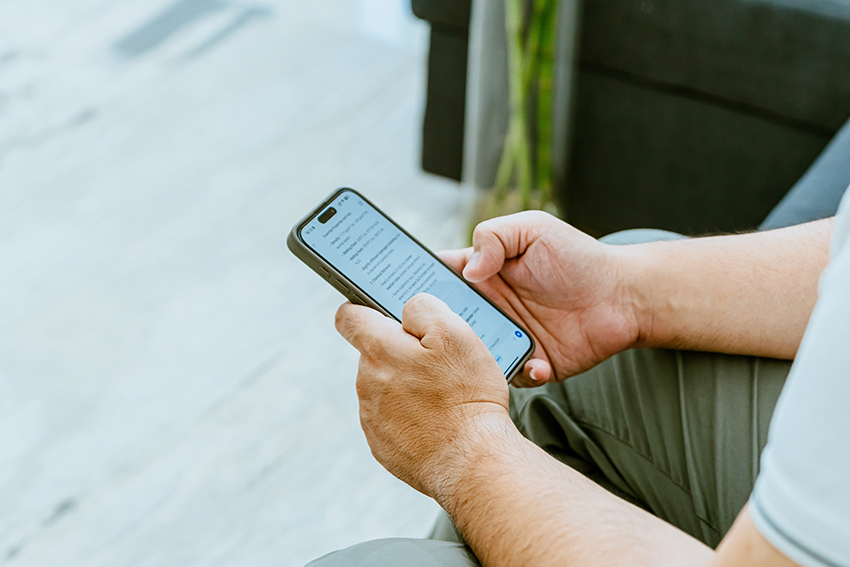
People thinking of turning to a general AI chatbot for therapy or emotional support, would do better to look at other ways they can meet their needs.
This is what Lecturer Dr Brigitte Viljoen told host Mike Kilpatrick on the AUT podcast Hey, Did you Know? recently.
“Please don’t use a general chatbot for emotional mental health support. It’s not designed for that,” the registered psychotherapist said.
“I would invite them to ask themselves ... what are they needing? Is it advice? Is it emotional support? Is it something else? And then thinking about, is there a place in their community that they can go to for that first?”
Dr Viljoen said the use of general AI chatbots for therapy or emotional support, is a big issue, with the top use of generative AI being for therapy and companionship, and AI use being widespread. Every week 800 million people worldwide are using ChatGPT alone, not to mention use of other AI chatbots.
One of the problems is that chatbots are agreeable and tell the user their ideas are clever and interesting when a friend may disagree or give friction, she says.
“And their feelings in terms of ‘the relationship’ with the AI feels so real that it becomes hard for them to distinguish what's reality and what isn't.
“People can get lulled into forgetting that the AI is a machine, and start to think it is someone that feels, that it’s real.
“It’s not just vulnerable people”, Dr Viljoen says. “Anyone can get caught up in this. Even those who are extremely worldly.”
Dr Viljoen says we also need to be better in Aotearoa New Zealand about asking questions around whether AI has been involved when somebody presents with a mental health issue.

Safer use of AI therapy
A therapist does much more than an AI chatbot can, including looking at non-verbal cues, relational and cultural context, co-regulation and other things, Dr Viljoen says.
However, there are many reasons why using an AI chatbot for therapy might be attractive to some, including financial reasons and accessibility issues.
If doing so, first think about what AI you are using, she says. Is it a mental health chatbot that is evidence-based for therapy, and is there any human oversight?
Dr Viljoen recommends turning off memory functions so that the chatbot is fresh every time you have a conversation.
And be clear with yourself as to your objective of engaging with the chatbot, only using it for a maximum of 30 minutes at a time, she says.
Also, think about how private your data is, whether it is stored in Aotearoa New Zealand, and whether the chatbot attempts to keep user-engagement active with endless conversation - which can lead to emotional dependence and attachment - or does it remind users to connect with people and support systems outside the chat.
Holding AI companies accountable
Dr Viljoen says Aotearoa New Zealand does not have any specific regulations and legislation that holds AI companies responsible for harm they might cause.
The Government needs to introduce legislation and regulatory bodies to put pressure on AI companies and hold them to higher standards of care.
Human psychotherapists are accountable, she says, with professional registration boards and legal responsibilities – and AI companies should be accountable too.
Useful links
- Access free, confidential trained counsellors with 1737
- AUT’s psychotherapy service
- Study psychotherapy at AUT
AUT supports the role our academics play as critic and conscience of society, as set out by the Education and Training Act 2020.
Our approach to academic freedom and freedom of expression is set out in our Charter of Academic Freedom which was developed and endorsed by the AUT academic community.