Q&A: Pay Equity Matters
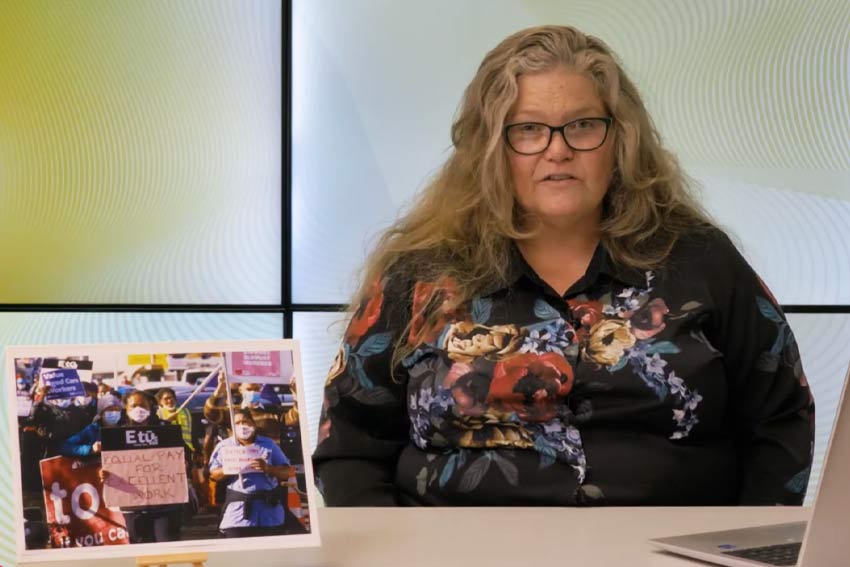
Professor Katherine Ravenswood explains why pay equity matters, unpacking gender and ethnic pay gaps, fairness, job value and women’s work in NZ today.
Q: What is pay equity?
When we think of pay equity, we are talking about the value of a job or occupation. When there is pay equity, everyone doing that job or occupation will get paid the same. We value that job based on the qualifications needed and the risks involved. If you make a mistake, what happens? Does the employer go to court? Could there be more tragic consequences? The idea of pay equity is that there is a fair valuation of the job and that your identity, whether it is your disability, ability, gender or ethnicity, is not a factor in how much you get paid.
Q: Why does pay equity matter?
Imagine you are a woman working really hard. Your job has a positive impact on lots of people, and you are getting paid less simply because it is women’s work. You are on the back foot from the start. You will earn less because you are a woman, which can affect your ability to afford education, pay for your children’s school camps and save for retirement. Is that really fair? Imagine how that would feel. You are paid less just because you are a woman. Over time, that can dent your confidence and make you wonder whether it is something about you. This is why pay equity matters. It affects financial security, confidence and career opportunities for tens of thousands of women.
Q: What’s the “gender pay gap”?
The gender pay gap measures the difference between what men and women earn. It is a whole-of-economy picture. We measure hourly earnings and compare them across all men and all women. Right now, the gender pay gap in Aotearoa New Zealand is 8.2%, meaning women earn 8.2% less than men across the whole economy.
Q: Compared to other countries, how does NZ do in terms of gender pay equity?
On the surface, New Zealand appears to do very well. We come in fourth in most international comparisons. The complexity lies in how that is measured. The ranking that places us fourth looks at the difference between men’s and women’s earnings while excluding part-time work. We know that women are more likely to work part time, and those jobs also tend to be paid less. Internationally we are doing well, but that does not mean we actually have pay equity. It depends on which part of the picture we choose to measure.
Q: What’s equal pay vs pay equity?
Equal pay is usually compared on an individual basis. For example, comparing Mark and Jane, who are doing the same job in the same organisation, but Jane is earning less. Same job, very similar work, less pay. Pay equity looks more broadly across an industry, society or the economy. We might compare an occupation such as librarians with engineers. We are not looking at who is doing the job, but stepping back to consider what is involved in those jobs and what those jobs are worth. That is what pay equity is about.
Q: Why is pay equity so often in the news?
In short, because it is not fair. Tens of thousands of women in Aotearoa are still working for less simply because they are women, and the issue has not been fixed. Care and support workers are a good example. They led the way in pay equity, and many people will have heard of Kristine Bartlett and her union, who fought to create change. Their work is complex and important. Care and support workers need emotional intelligence, relationship-building skills and the ability to make judgements about people’s health and wellbeing. Yet it has often been viewed as low-skilled work. Kristine Bartlett and her colleagues proved in court that this undervaluation existed because it was women’s work and because caring was not considered a skill. That is neither fair nor right, and it is why pay equity remains in the news.
Q: What about the ethnic pay gap – what is it?
This is an important question. The principle is similar to pay equity. The gender pay gap exists where people or occupations are paid less because of gender. The ethnic pay gap exists where people or jobs with large numbers of ethnic minorities are paid less because of the ethnicity of those doing the work. We can see this in labour market statistics and in areas such as seasonal migrant visas for agricultural and horticultural work. These jobs are often hard, temporary and low paid. Many people born in Aotearoa New Zealand do not want to do them, yet we welcome workers from other countries, mainly in the Pacific, to do this work. These visas generally do not provide pathways to residency or citizenship in the way that some other work visas do.
Q: Should women in New Zealand go on strike like Iceland women did in 1975 and 2023 to get people to understand how much women’s work underpins society?
Yes.
Technically, in Aotearoa we can only legally strike during collective bargaining. However, if large numbers of people took collective action at the same time, it would be impossible to deal with everyone through dismissals or the courts. It is worth thinking about this kind of action for an issue like pay equity because it matters.
Q: What can we do to help bring about pay equity?
There are four things we can do. First, change the narrative by talking about pay equity, what it is and why it matters. Second, take action by signing petitions, joining rallies or protests, or making submissions to MPs and the government. Third, if you are an employer, examine your organisation. Look at your payroll data to see whether you have a gender pay gap and understand why it exists. Employers should also examine their own biases when offering wages and opportunities. Finally, vote for pay equity by supporting policies that you believe best advance pay equity in Aotearoa New Zealand.
AUT supports the role our academics play as critic and conscience of society, as set out by the Education and Training Act 2020.
Our approach to academic freedom and freedom of expression is set out in our Charter of Academic Freedom [PDF, 175.9 KB], which was developed and endorsed by the AUT academic community.