Q&A: Nutrition Matters
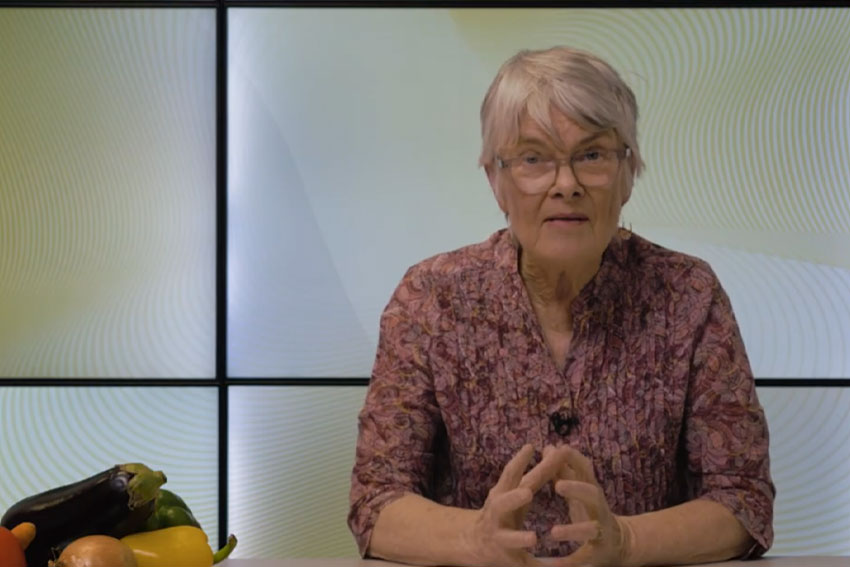
Emerita Professor Elaine Rush answers common questions about food, from BMI and fats to fasting and ultra-processed foods, with practical, evidence-based advice.
Is my BMI too high? What does this mean? And what should I do about it?
BMI schmi-MI. It's just a measure of what you weigh and how tall you are. Basically it's how much space you take up, but it says nothing about you. It's great for population statistics, and if it is high, for some people it means they have an excess of body fat. But you need to have other tests and other measures to see whether this high body mass for height is affecting your ability to function.
Are there such things as good foods and bad foods? Are there foods that you shouldn’t eat?
Yes. There are some things that we sell as food in New Zealand that are perfectly safe to eat. They won't poison you, but long term they will do you no good. Amongst those things I class sugary drinks. Michael Pollan said eat food. Real food. Only food that your grandmother would recognise.
Should meat pies, sausage rolls and soft drinks be banned from schools?
You already know what I think about soft drinks: a non-food and only doing damage. But pies and sausage rolls are actually part of the fabric of life of New Zealand, and they can be improved nutritionally by tweaking the recipe. So instead of thinking about banning outright and saying no, getting the food police and check about things, how about actually having policies around vegetables and fruit and the cost of these things? And dare I say it, free school lunches, which have all the elements of the things that children should be eating.
Do I really need to eat five fruit and vegetables a day?
Absolutely. And you need to eat more than that. And I would say vegetables and fruit because current guidelines in New Zealand, which are supported by evidence and promulgated by the Ministry of Health, say we need to eat five different vegetables a day and two fruit.
What do people mean when they talk about healthy fats? I thought all fats were bad.
Well, no. Fat isn't bad.
Fat is a wonderful source of energy, and it's what makes me cuddly. Fat is the basis of our sex hormones. It's membrane around every cell in our body is composed of fat and cholesterol. It's actually a functional, important part of our bodies. The problem is, if we eat too much and we don't get the liquid fats, fats that are oils and are liquid at room temperature except for coconut oil. And those fats contain what's called essential fatty acids. Now, essential means that our bodies can't make them. So we have to get in our diet, just like we have to get vitamins and minerals in our diet. We can't make them.
It's important to have good sources of these essential fatty acids, which are things like avocados and sardines and tinned tuna and mackerel and not quite so much of the liquid oils, but in moderation. Because the thing is, fat's got, per gram twice as many calories as carbohydrate or protein. So you don't need to eat so much to actually gain a lot more energy than you might want.
Is breakfast really necessary for everyone every day?
Yes, probably for most people. But some of us can cope without breakfast. I would say once we've stopped growing, because children need regular meals to be able to keep their high energy bodies going. And older people need to eat more often to be able to absorb all the nutrients they need. And the working person who's actually doing manual labour or a lot of exercise, they really need that energy so they can do the work. Because working means changing energy from one form to another.
There is evidence that you can miss meals. It can help you lose weight and burn more fat. This fasting. And if you do that and feel okay and you're still able to function okay, not getting hangry, then yes, go ahead and do it. I mean, even the fast of 12 hours is really hard for some people, but that could mean stopping eating at 9:00 at night and then starting again at 9:00 the next day.
We need to listen to our bodies. If you are hungry, then do eat, but make sure you've got the right foods available. And also, if you are thirsty, you should drink water because that's the best way we have of controlling our hydration.
Is detoxing real? Do we really need to help our bodies detoxify?
Our bodies are able to cope with all sorts of rubbish that we throw at it, including alcohol, which is probably the most widespread toxin. So long as your liver and kidneys and your circulation are functioning well, then probably the best way to detoxify is going for the fruit and vegetable oils and the wholesome foods, because those are the things that will make your body function better and be able to clear the rubbish that you don't need.
My doctor says that my bloods are fine. So does this mean I can just keep on eating what I’m eating?
When your doctor says your bloods are fine he’s probably talking about maybe that you don't have diabetes, that your cholesterol is in a reasonable range. But he hasn't tested for some of these other things.
And really, you can't do it. You can't do a blood test for everything. But what you can do is balance it on the other side by eating a variety of wholesome vegetables.
With so many overwhelming claims about individual foods, how do you know what you should actually do for your health?
Advertising is incredibly powerful. The real food claims that are put on a front of a packet are highly regulated. But they're only usually for one nutrient or one food. And we have to have a holistic diet with all these different foods on our plate offering different things.
When I go shopping, I try to avoid the centre aisles and shop the perimeter, because on the perimeter are the whole foods, the fruit and vegetables, the good sources of protein, the bread and the milk. I really only venture into the aisles when I'm looking for my dried legumes and tins of tomato and, fish and those sorts of things.
Ultra processed foods; are they good or bad for you?
Some processing of foods is great. The pasteurisation of milk has saved countless millions of lives. But excessive processing means that first of all, the food has to be packaged and it has to have on the back a list of the ingredients. If you go much beyond 5 or 6 ingredients, you're getting into that really tricky territory where the ingredients actually have numbers and not names, and some of them are emulsifiers and some of them are sweeteners. It's very complex. Look at the ingredient list. And if it's too complex for you to read and you don't understand it, don't have that food.
Do any of the fad diets we’ve seen over the years actually work?
The best evidence we have in the world about what the best diet is comes from places like the Mediterranean and Japan and in certain parts of South America where people live to be really old, over 100 and actually still have productive, healthy lives.
What’s your favourite quick and healthy dinner?
Well, fast is good because I get hungry, but it's a good source of protein, like salmon. It doesn't have to be huge. Then steamed vegetables and a baked potato or brown rice.
What’s in your pantry?
Well, particularly after Covid, I'm really keen to have lots of good tins of food. That includes tomatoes, tinned legumes, and it also includes tinned fish. I have basics like potatoes and onions and I buy a reasonable quantity of them. I have some treats as well, like dark chocolate, because food is about enjoyment and sharing that fellowship. Treats, sometimes in small quantities, but you share the love. And when my grandchildren come round and you know, it's really important to have some treats available that they really like.
AUT supports the role our academics play as critic and conscience of society, as set out by the Education and Training Act 2020.
Our approach to academic freedom and freedom of expression is set out in our Charter of Academic Freedom, which was developed and endorsed by the AUT academic community.