Q&A: Kāinga Matters
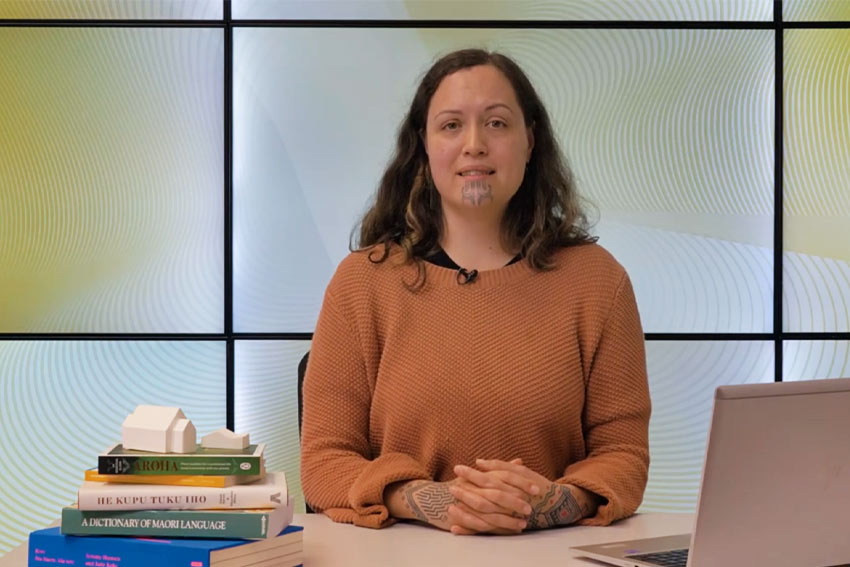
AUT senior lecturer and architect Jade Kake on papakāinga, finding out about your iwi’s housing plans and paths to connected community living in Aotearoa.
Q: What is the difference between a kāinga, a papakāinga and a normal housing development?
Before European contact and colonisation, there were three main forms of Māori settlement: kāinga, which were villages; pā, which were fortified villages; and seasonal encampments associated with fishing, cultivation and other food-gathering activities.
Papakāinga comprises two components: papa, derived from Papatūānuku, the ancestral Earth mother, and kāinga, meaning ancestral village. In a contemporary sense, papakāinga generally refers to a housing development or village that includes non-housing functions, such as shared gardens, laundries and other communal facilities.
Papakāinga is generally for people who whakapapa, or have genealogical connections, to the land and to one another. The principal difference from a conventional housing development is that residents are connected to the place and often to each other through whānau relationships. There is also frequently an explicit kaupapa around revitalising te reo Māori and cultural practices.
Q: Papakāinga sounds appealing, but how can residents maintain privacy and avoid constant interruptions from whānau?
One of the benefits of papakāinga is the ability to live together as whānau, to have informal shared spaces and interactions, and to support one another. However, people have different schedules and priorities.
A well-designed papakāinga should provide a clear separation between public, shared spaces and private spaces. This comes down partly to good design and partly to management, communication and setting expectations within whānau.
Q: What is pepper potting, and what does it have to do with kāinga?
Following the Second World War, there was a significant push for Māori to move from rural areas into urban centres. Cities required labour, rural land was being sought for other uses, and many rural communities were struggling after the loss of young men during the war.
Many Māori whānau moved to urban centres such as Tāmaki Makaurau and were often encouraged into mixed social or public housing developments. These developments sometimes explicitly “pepper potted” Māori families among Pākehā households. The intention was cultural assimilation.
There are booklets from that era offering guidance on how Māori should be good neighbours in Pākehā neighbourhoods, including expectations that Māori cultural practices should be set aside. There may have been some social-cohesion benefits, but these came at the cost of Māori culture. The goal was for Māori to live more like Pākehā, rather than for communities to understand one another and live harmoniously together.
Q: I do not want to move back to my ancestral home because there are few jobs there. Can papakāinga be developed away from whānau land?
Much of the whenua Māori that remains in whānau and hapū ownership is in rural areas, and much of it is not well serviced by infrastructure or employment opportunities. If people want to return to ancestral lands, they may need to bring employment with them or work collaboratively with their whānau, hapū or iwi to create economic opportunities.
There are positive initiatives around the country where iwi are creating employment for whānau. However, access to work remains a genuine consideration.
The term papakāinga is generally reserved for housing developments or village living on ancestral land. However, papakāinga-style developments are emerging in urban areas. For example, a trust near Taupō has supported housing developments on whenua Māori in its rohe, as well as housing in Rotorua and an apartment development for descendants and tribal members living there.
These developments need to approach mana whenua respectfully. Their purpose is to meet tribal members where they are, including those who may not be ready to return home, whose employment is elsewhere, or whose whānau have lived in urban areas for multiple generations. Papakāinga-style developments can exist outside ancestral land, although but the term papakāinga is generally reserved for developments within the ancestral rohe.
Q: I cannot afford a house. What options are available?
Housing affordability and home ownership are structural issues. Home ownership was more accessible for previous generations, but for many people now, particularly younger generations, it is extremely difficult. Collectively, there is a responsibility to address those structural problems.
For individuals and whānau seeking permanent, secure and safe housing in which to raise their families and live connected community lives, shared equity or progressive home ownership may be an option. These models are generally offered by community housing providers.
A provider may develop housing and offer it to whānau who meet eligibility criteria, usually based on income. The focus is often on working whānau who can pay rent consistently and could be supported into home ownership, but who may not be able to obtain a mortgage or assemble a deposit.
One model involves paying rent at an agreed rate for five years, then having the option to capitalise that rent as a deposit for the dwelling. These opportunities remain limited, but they can provide a pathway into housing while longer-term structural issues are addressed.
Q: For those who whakapapa Māori, how can we find out whether our iwi or hapū are developing housing and how to take part?
If you are a member of an iwi, ensure that you are registered with the relevant iwi entities. Some iwi have several entities, so this may require research. Share this information with whānau and encourage others to register as well.
Iwi may undertake housing-needs surveys, which are important to complete. They may also invite expressions of interest for upcoming housing projects.
If you are a shareholder in Māori land, identify the land in which you have shares and who administers it. This may be through a whānau trust or through shares held by a parent. Pātaka, previously known as Māori Land Online, is a useful tool for identifying land holdings. Contact the relevant trusts, provide your details and attend meetings.
The iwi route may sometimes be more straightforward because iwi can have the resources to deliver substantial projects. However, becoming involved in whānau land governance can also create opportunities to contribute skills, knowledge and support the development of housing initiatives.
Q: Does a papakāinga need to be designed by a Māori architect?
Not necessarily. The best outcome may be achieved by working with someone who has whakapapa to your whānau, hapū or iwi, but this is not always possible. There may not be architects within a particular whānau, hapū or iwi.
The next best option may be a Māori architect with the skills and cultural sensitivity to understand requirements, facilitate a robust process and support a strong design outcome.
If this is not possible, the important consideration is finding an architect, regardless of ethnicity or cultural background, who understands and cares about the kaupapa, is invested in the community they are working with, and can work alongside whānau through what can be a lengthy process. Whānau will live with the decisions made during the design process, so that process matters greatly.
Q: I am Pākehā. Are papakāinga only for Māori?
Papakāinga is generally a term reserved for people living on ancestral land with people to whom they are related. Pākehā may feel strongly connected to the natural environment, their communities and Māori culture, and may recognise valuable qualities in papakāinga living. However, the term has a specific relationship to whakapapa and whenua.
Pākehā partners within a Māori whānau are part of that whānau and may live in papakāinga. For people who are not Māori but are interested in living more collectively with family or community, co-housing can be an alternative.
Aotearoa has examples of co-housing developments, including Cohaus in Grey Lynn. These can include people from varied cultural backgrounds and may share many qualities with papakāinga. The principal difference is that residents are not necessarily related to one another and may not whakapapa to the land.
Co-housing communities can still be united by a shared kaupapa: living more closely together, sharing resources, reducing environmental impacts and being meaningfully embedded in a community.
AUT supports the role our academics play as critic and conscience of society, as set out by the Education and Training Act 2020.
Our approach to academic freedom and freedom of expression is set out in our Charter of Academic Freedom which was developed and endorsed by the AUT academic community.