Q&A: Food Politics Matters
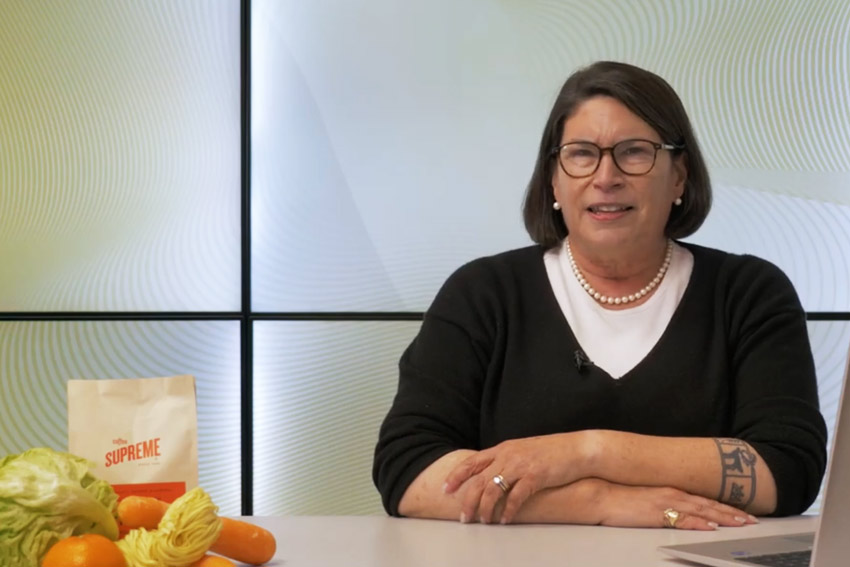
AUT Professor Tracy Berno, expert in resilient and sustainable food systems, answers questions about the food system, health, the environment and waste.
Q: What is wrong with the food system?
Food is a human right, but the current food system is driven by profit rather than ethics. Agriculture, manufacturing, distribution and land are largely privatised, and multinational corporations hold considerable power. Their imperative is to make money, not necessarily to prioritise health, the environment or consumers.
Chocolate illustrates the consequences. Around 60% of the world's chocolate is produced in Côte d'Ivoire and Ghana. Pressure to keep production costs low is associated with child labour and appalling working conditions in the cocoa industry. The price and size of a chocolate bar do not reveal the human costs behind it.
Q: Are big companies controlling what we eat?
To a great extent, yes. A small number of multinational companies control much of the processed food sold in grocery stores. In New Zealand, two major corporate groups dominate grocery retail, limiting what reaches store shelves. By the time shoppers arrive, retailers and suppliers have already made many of the choices about what is available. A handful of international companies also control a large share of the seeds available to agriculture. Because so much food begins with a seed, this concentration of power matters.
Marketing adds another layer. Product placement, packaging, displays and music in grocery stores are informed by research into consumer behaviour and designed to encourage spending. Our decisions are shaped by more than individual preference.
Q: Why is healthy food so expensive?
First, we need to ask what counts as healthy food. Manufacturers may present ultra-processed products as healthy options, although many are not. Processing creates opportunities for businesses throughout the supply chain to earn revenue. For example, at the time of recording, a kilogram of potatoes and a 150-gram bag of potato chips each cost about $3.50 at Professor Berno's local grocery store. The chips involve additional processing, oil, packaging and transport, among other inputs.
Price is not the only barrier. Preparing less-processed ingredients takes time and food literacy: the skills to turn them into a meal. Prepared products offer convenience to people who do not have those skills or the time to use them, even if they cost more.
Q: Why is it hard to identify a healthy option from food labels?
Labels can be difficult to interpret and require food literacy. Some packages use wording that implies a product is healthy, a practice Professor Berno calls “health washing”. The Health Star Rating system was intended to help shoppers compare products, but its ratings can be confusing without context.
Professor Berno points to a historical example in which Milo powder displayed a 4.5-star rating based on being prepared with trim milk, while the powder alone rated 1.5 stars. She also notes that olive oil can receive fewer stars than some margarines. A front-of-pack rating does not, by itself, tell the whole story about a food.
Q: Is the way we eat damaging the planet?
Yes. The way the agrifood industry currently operates contributes to environmental damage, biodiversity loss, climate change and declining water quality, alongside social harms. These impacts are connected to how food is produced, processed and distributed.
Q: Would eating more plant-based food help?
Substantial research suggests that moving towards a more plant-based diet can benefit both the environment and human health. That does not mean every meat-free or dairy-free product is necessarily better: some plant-based substitutes are ultra-processed. Food also has deep personal and cultural importance, and people may resist being told what to eat. Those factors need to be considered alongside the evidence.
Q: Does it matter if my rubbish bin is full of uneaten food?
Personal food waste matters, but it is only one part of a larger problem. Around 30% of food produced globally is wasted across production, processing, retail and households. Wasting food also wastes the soil, water, labour and money used to produce it. Professor Berno describes food waste as a major source of greenhouse gas emissions.
Q: What can I do to reduce food waste?
Start by buying what you need, even when a grocery store encourages you to buy more. Store food appropriately so it lasts longer, and find ways to use leftovers. Parts commonly discarded may also be useful: potato peelings can be baked into crispy chips, while chicken bones can be made into stock.
Understand date labels, too. A “use by” date concerns food safety; food past that date should not be eaten. A “best before” date concerns quality, and food may still be suitable to eat afterwards if it has been stored correctly. If food cannot be eaten and you are able to compost it, do that rather than putting it in the rubbish. Disposal should be the last resort.
AUT supports the role our academics play as critic and conscience of society, as set out by the Education and Training Act 2020.
Our approach to academic freedom and freedom of expression is set out in our Charter of Academic Freedom which was developed and endorsed by the AUT academic community.