Public art and architecture make meaning
Dr Carl Douglas, Senior Lecturer, Spatial Design, says he’s celebrating the upcoming opening of Tāmaki Makaurau's new City Rail Link stations. They represent a huge achievement: over a decade of work by Auckland Council, central government, urban advocates, planners, engineers, architects and others. An infrastructure project of this scale is a once-in-a-lifetime chance to invest in public spaces. Some (even our mayor) have suggested that the project is "gold-plated" and that the art and architecture of the stations and their associated public spaces are excessive. But these are spaces a huge number of people will use. They create new connections, unlocking access and development for wide swathes of the inner city and across the city's transport network. They and the people who use them deserve to be celebrated.
Cities are not just collections of buildings, they are social spaces. Scholars who study the social dimensions of cities, such as Henri Lefebvre, have argued for our "right to the city". That is, since the city is made up of all of us collectively, we should all benefit from it. For a city to be a flourishing environment it needs to be designed with a long-term perspective for accessibility and quality of life. Good public spaces, as the case of the Wynyard Quarter has shown, attract visitors, enable business to thrive, and support an active social world. Investing in public space is investing in the ongoing life of the city.
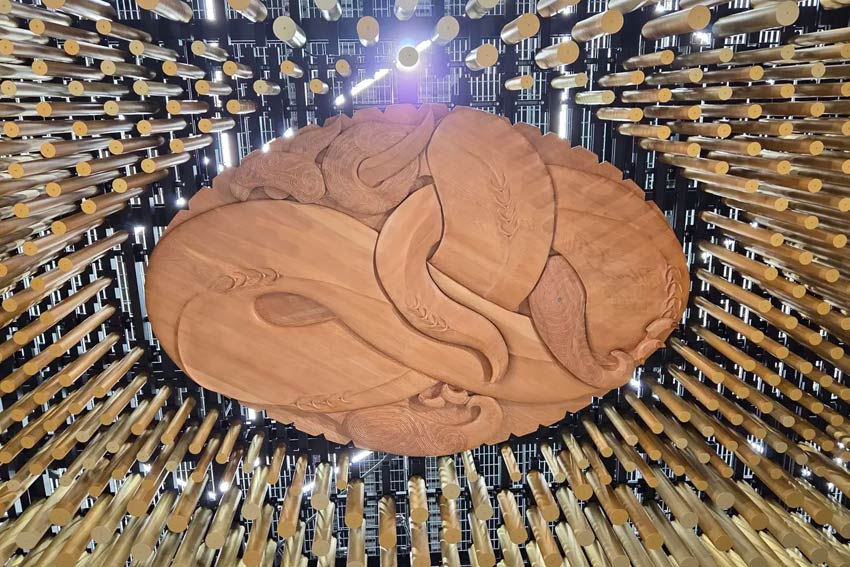
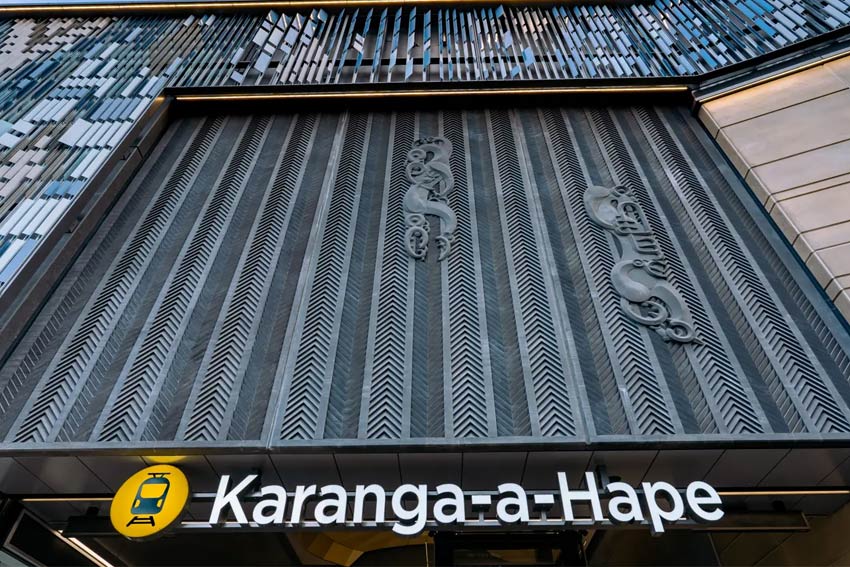
Art and architecture are crucial in making spaces meaningful. They reflect our aspirations and stories, and create shared memories. Beautiful new works like 'Horotiu' by Chris Bailey (Ngāti Hako, Ngāti Pāoa, Ngāti Porou, Te Aupōuri) and Sally Smith, or the Atua panels on the face of Karanga-ā-hape Station by Reuben Kirkwood (Ngāi Tai ki Tāmaki) offer more than visual interest. They build a sense of place, enabling us to interpret our environment. They help us work out where we are in the simple sense of providing enduring landmarks, but also in a deeper sense locating us in a wider social, cultural, and natural context. Cities can often be alienating, disenchanting places. Quality, meaningful public spaces and public architecture are part of what political writer Silvia Federici calls "re-enchanting the world".
Jade Kake, Senior lecturer AUT School of Future Environments says The City Rail Link project is a visible assertion of identity and culture in the urban realm. In a highly urbanised environment where Māori culture and identity are largely invisibilised, and the ongoing relationships and responsibilities of mana whenua are routinely minimised, the City Rail Link is an ambitious city-making project that is a flagship intervention in the fabric of Tāmaki Makaurau. The project involved significant collaboration, with eight mana whenua iwi of Tāmaki Makaurau involved in the design of the project, including Te Ākitai Waiohua, Te Kawerau ā Maki, Ngāti Maru, Ngāti Paoa, Ngāi Tai ki Tāmaki, Ngāti Tamaoho, Ngāti Te Ata Waiohua and Ngāti Whātua Ōrākei.
The project is the most high-profile application of Te Aranga principles and methodology to date, with the principles being formally adopted for the project in 2012. Te Aranga is a design framework for mana whenua-led translation of mātauranga Māori or cultural knowledge into place-based, built environment interventions. Te Aranga was developed by Ngā Aho Māori design professionals and mana whenua of Tāmaki Makaurau in the mid-2000s and early 2010s through major civic projects. Because of the long-term nature of the project, the City Rail Link was a testbed for the principles, enabling Te Aranga principles and wider approach to become embedded in major civic projects across Tāmaki Makaurau. These early applications also played a role in influencing policy, with advocacy in the early-mid 2010s led by Ngā Aho leading to greater adoption of Te Aranga across Auckland Council policy and process. The fruits of these early efforts are now visible, not only with the completion of the City Rail Link as an individual project or series of interconnected projects, but also the changing social attitudes and professional competencies over time that early projects such as the City Rail Link have influenced in the practice of architecture and urban design in Aotearoa New Zealand.
The naming of each of the stations gives mana or status and respect to ancestral narratives and associations that have previously been erased through the overlay of colonial names. Mana whenua nominated artists, which include Graham Tipene, Reuben Kirkwood and Tessa Harris, have creatively inscribed cultural expression into the design of the stations in a way that is bold, genuinely transformative, creating a sense of place and pride in our city. In addition to more localised narratives, the foundational creation narratives of the separation of Ranginui (the sky father) and Papatūānuku (the earth mother) connect the stations. This foundational narrative forms a framework that is applied across the four stations, enabling an overall cohesion and individual interpretation specific to place. Contemporary Māori architecture on a civic scale is, in part, about spatial justice, and undoing the legacy of colonial erasure. But it is also about understanding our collective identity and creating a strong sense of shared civic and cultural identity in a city which communities from many cultures and places of origin now call home.