Law student represents Indigenous voices
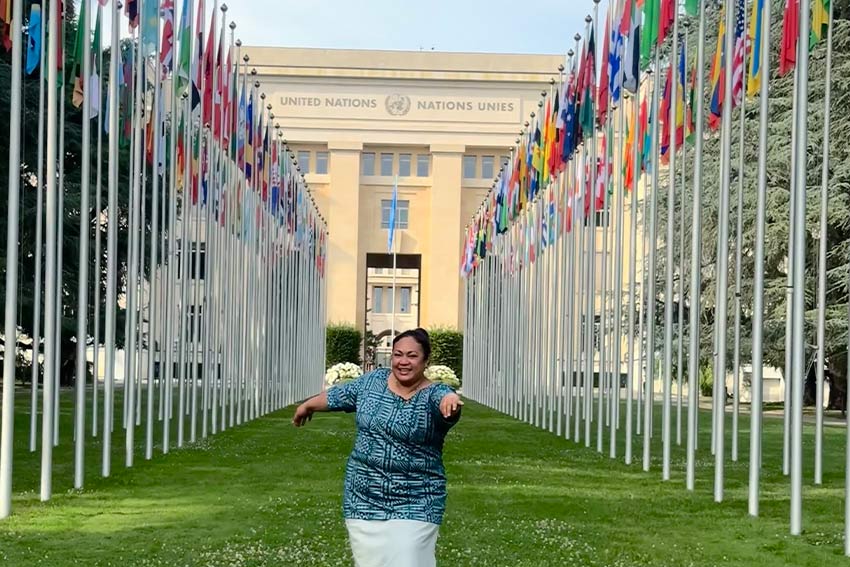
AUT Law student Maria Tavui Laki recently returned home from Geneva, Switzerland, after participating in the Expert Mechanism for the Rights of Indigenous Peoples (EMRIP) as a UN Global Indigenous Fellow 2026.
This was a huge accomplishment for Maria who will soon graduate with a Bachelor of Laws (Honours) (First Class).
Maria reflects on her experiences below.
“Representing Samoa, Tu Mau, and AUT at the UN has been one of the greatest privileges of my legal journey.
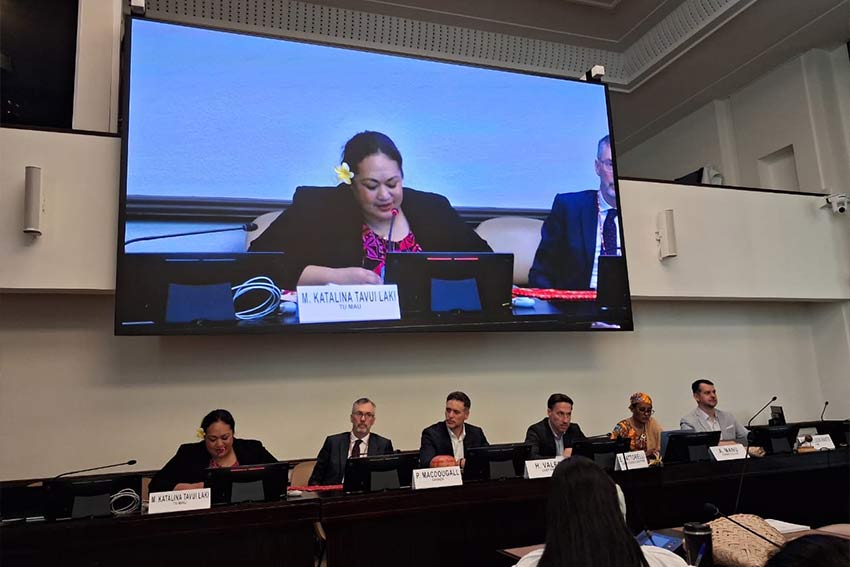
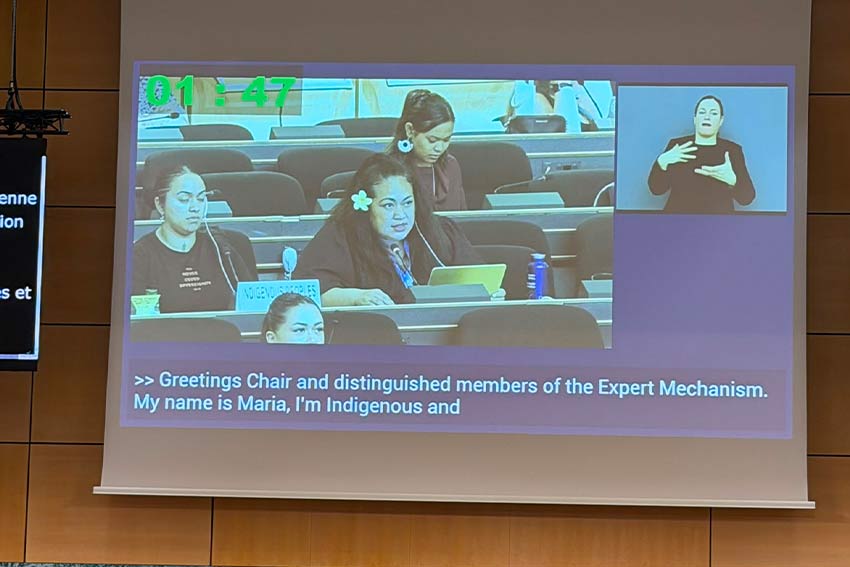
The UN Indigenous Fellowship began with two weeks of intensive training at the Australian National University, followed by four weeks in Geneva with the Office of the United Nations High Commissioner for Human Rights. The fellowship provided a practical understanding of the UN human rights system, including the Human Rights Council, Treaty Bodies, Special Procedures, and the EMRIP.
It also gave me opportunities I never imagined possible. I was honoured to speak at the opening of the 2026 UN Indigenous Fellowship, deliver two interventions before the EMRIP, and present my Honours dissertation on Indigenous labour mobility to the Samoan Ambassador, Cabinet Ministers and CEOs.
We also had the privilege of being hosted by the Swiss Government in Bern, where we learned about Switzerland's Parliament and democratic institutions.
Beyond the formal programme, I learned from ambassadors, cabinet ministers, CEOs, academics, doctors, engineers, scientists, Indigenous knowledge holders and leaders from every region of the world. We engaged with experts from UN agencies and international organisations, including the International Labour Organization (ILO), the World Health Organization (WHO) and the Food and Agriculture Organization (FAO), gaining valuable insights into how international institutions work alongside Indigenous Peoples to address global challenges.
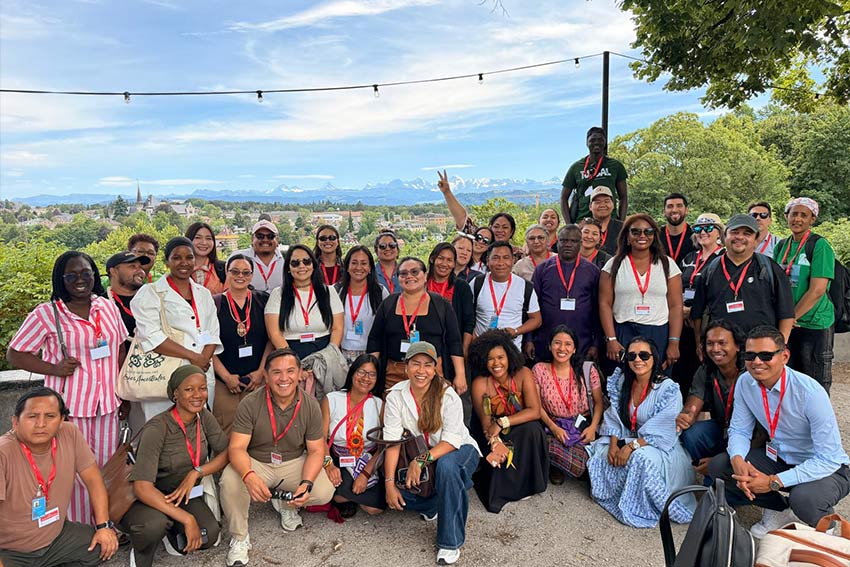
Throughout the fellowship we explored issues including biodiversity, climate change, human rights, the plastics treaty, critical minerals, ecocide, Indigenous languages and the protection of traditional knowledge.
What inspired me most was seeing Indigenous Peoples not only as rights holders, but as lawyers, researchers, scientists, engineers, educators, innovators, knowledge holders and custodians whose expertise continues to shape solutions to some of the world's most pressing challenges.
What I didn't expect was that the fellowship would be the beginning, not the end, of my journey. It has already opened doors for continued international engagement, including participating in the Local Communities and Indigenous Peoples Platform (LCIPP) Regional Gathering in Fiji this August, and has created opportunities to contribute to future discussions on business and human rights, and climate governance.
I return to Aotearoa with a deeper appreciation of the responsibility that comes with using my voice and my legal education in service of others. This experience has strengthened my commitment to advancing Indigenous rights, supporting Pacific communities, and ensuring Indigenous voices are represented where international decisions are made.
I hope my journey encourages at least one person to embrace opportunities beyond the classroom, because you never know where they might lead."