Helping solve kauri dieback disease
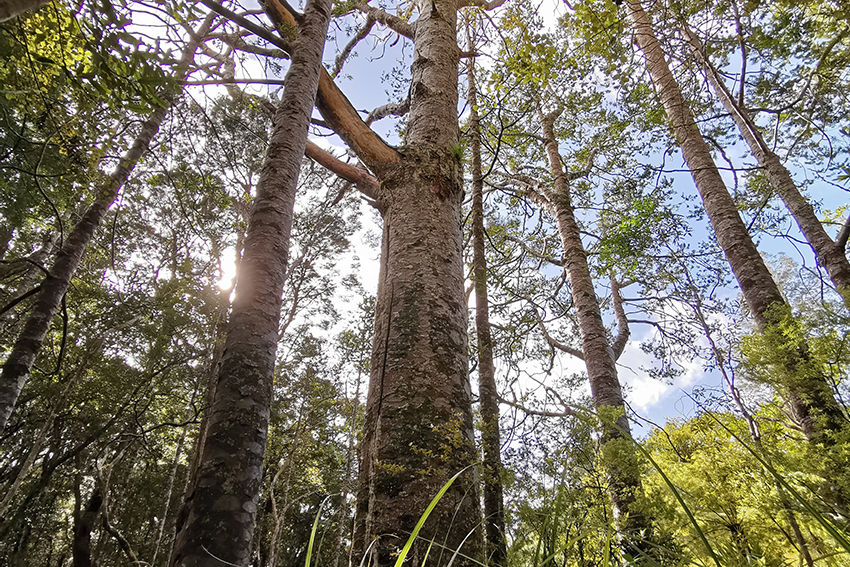
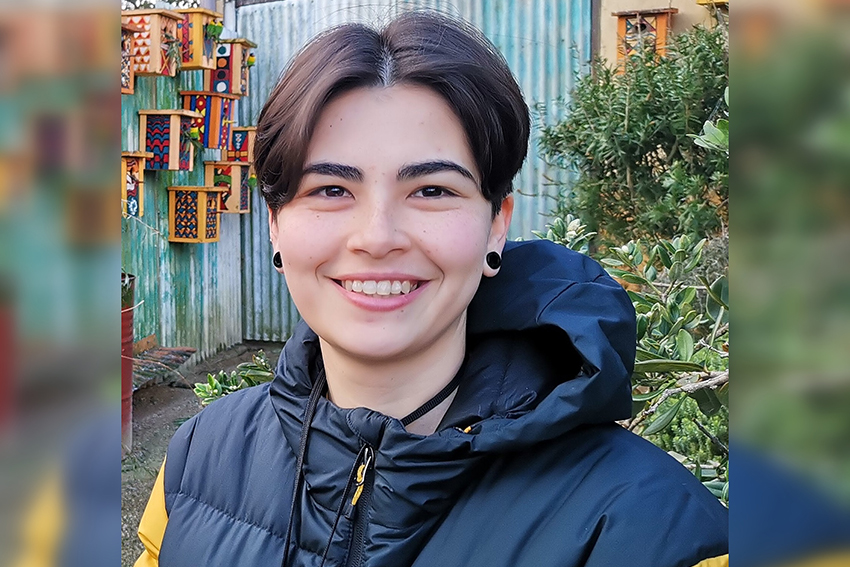
AUT researcher Zoe King digs beneath the forest floor, revealing how soil microbes shape kauri health, influence dieback disease, and offer clues to protecting one of Aotearoa’s great taonga.
Kauri dieback disease was a hot topic when I started this work in 2021, but before that I didn’t really know much about this incredibly significant forest giant.
I knew it was a taonga to Māori, but I didn’t know there was less than 0.5% of Aotearoa’s original kauri forest left. Before European settlement in the 19th century, kauri forests dominated much of the country's northern third, with an estimated coverage of 1 to 1.5 million hectares. After extensive logging (for export) and clearing (for farmland) of kauri forests, only around 7500 hectares of sparsely scattered original kauri forest remain, and now trees of all ages are under threat from kauri dieback disease.
In 1972, the first symptoms of kauri dieback were spotted on Great Barrier Island: thinning canopy and bleeding gum around the base of the trunk. Similar symptoms later appeared in the Waitākere Ranges in 2006. The disease is caused by Phytophthora agathidicida, a soil-borne organism similar to fungi that attacks the roots of kauri trees. As a foundation species, kauri’s premature loss can have knock-on effects on surrounding plant communities, drastically altering these unique habitats. Beyond their local ecological importance, kauri forests are among the most carbon-dense ecosystems globally, with mature trees storing large amounts of carbon.
Researching the disease became a priority, but much of the work focused on above-ground factors. No one was really looking underground at soil microbes, which are a key component of forest ecosystems. And this is where my research comes in.
Below-ground microbial communities are central to the forest environment, being involved in nutrient cycling, plant growth, and disease suppression, yet their interactions with soil-borne pathogens and host plants are poorly understood in natural forest environments. So, it made sense to look deeper into this microscopic community.
My PhD research was funded in part through the NZ BioHeritage Challenge fund, Ngā Rākau Taketake (NRT). We were given permission from local iwi, Te Kawerau ā Maki, to enter the Waitākere Ranges and collect soil from several different kauri stands. This proved challenging at times, especially hiking with all the soil samples uphill while dodging the rain.
Soil was collected from around the trunks of 96 kauri trees – made up of healthy, declining, and dead canopy trees – across three sites. Using various DNA-sequencing methods, we characterised the microbial community to determine “who” was there and “what” they were potentially doing, generating over one terabyte of raw data to work with!
By combining this genetic data with different soil measurements (including its chemical and physical properties), we explored how factors like soil-borne pathogens, tree health, and location shape the underground microbial world.
The findings revealed that the soil microbial communities varied significantly among the three sampling sites. The biggest driver of these differences is the soil’s natural chemical and physical conditions, rather than the presence of the pathogen ( P. agathidicida ) or the health of individual trees. However, pathogen presence and tree health did have a small but measurable effect, suggesting they play a secondary role in shaping this community.
While these findings align with what we might expect for forest ecosystems, their true value lies in establishing a detailed snapshot of kauri forest soil communities at the time of sampling. This baseline gives us a point of reference to track how these microbial communities shift over time as the forest faces ongoing environmental change and disease pressure.
Looking forward, I am currently analysing samples taken around the same trees two years after initial sampling to see what has changed. Additionally, we are now looking at the microbes of other plants around the kauri forests to see if they have a defence against the pathogen. Eventually, we hope to identify a microorganism that produces an enzyme or metabolite that fights the pathogen.
With forest ecosystems increasingly threatened by climate change, land-use pressures, and emerging pathogens, understanding how different ecosystems respond to such disturbances has never been more important. And so, our work goes on.
“Ko te kauri ko au, Ko te au ko kauri - I am the kauri, the kauri is me.”
This article was written by Zoe King about their research Variation in Soil Microbiomes Associated with Kauri Trees Threatened by Dieback Disease (2026). It was originally published in the Sunday Star-Times Brainwaves feature. Read the original on The Post.
Useful links
AUT supports the role our academics play as critic and conscience of society, as set out by the Education and Training Act 2020.
Our approach to academic freedom and freedom of expression is set out in our Charter of Academic Freedom, which was developed and endorsed by the AUT academic community.