First Pacific Professor of Pacific ECE
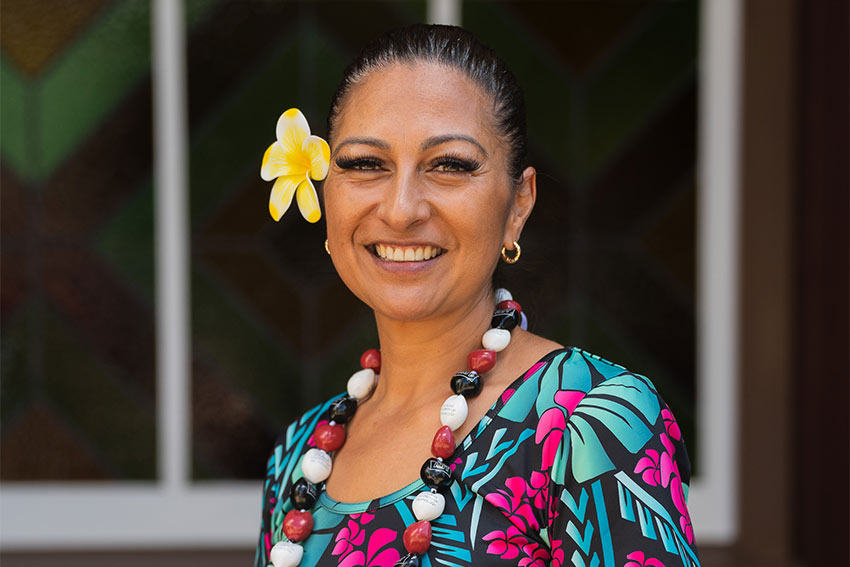
After 25 years of teaching, researching and leading early childhood education (ECE) for Pacific children, AUT’s Pro Vice-Chancellor Pacific, Jacoba Matapo, has become the world’s first Pacific Professor of Pacific ECE following AUT’s 2025 academic promotions round.
Professor Matapo’s influence on the progression of New Zealand’s Pacific ECE sector is prolific and when commenting on the historic milestone, she says it is a huge honour to be building on the visionary work achieved by the pioneering Pacific women who came before her.
“The spectrum of Pacific ECE centres in New Zealand only exist today as a result of the pioneers who started paving the way 40 plus years ago for ECE practices grounded in indigenous Pacific values, philosophies, language and pedagogy.
“As a person of Samoan and Dutch heritage, I feel hugely honoured to be able to play an instrumental role in continuing to build on what they developed for our many different Pasifika communities.
“My love of my culture and a vision that all Pacific children have access to a Pacific-led ECE – which our research shows will give them the best start in life as Pacific peoples - are fundamental reasons driving me to do what I do.
“My professorial position will enable me to keep advocating for the ongoing development of Pacific ECE, as well as nurturing the unique relationship tagata o le Moana has with tangata whenua to shape ECE practices for New Zealand’s increasingly multi-ethnic generations.
“In this position, I am grateful for the opportunity to walk alongside Pacific colleagues and communities, supporting their aspirations for ECE through locally led, co-designed efforts that decolonise and indigenise practice.
“I think we have an opportunity to make Aotearoa a global hub for Pacific ECE, with AUT playing a central role in achieving this. We are now the only Aotearoa-based university offering a Bachelor of Education (Teaching) Pacific specialisation where ECE and primary student teachers access critical foundations in culturally sustaining teacher education and pedagogy. Our research findings into Pacific ECE pedagogy are importantly informing current practices and policies,” says Professor Matapo.
The research shows Pacific ECE provides Pacific children with strengthened fa’asinomaga (Samoan - identity/belonging), confidence, curiosity and interest in the world through a Pacific lens, a desire to learn in a way that is culturally-affirming, bilingual language skills and many other key competencies and dispositions for life-long learning.
“There is much change happening across the early childhood sector and I am grateful to contribute in ways that strengthen Indigenous Pacific philosophies and pedagogies so our work reflects who we are within the global community.”