Do we really need carbs to fuel our gym sessions?
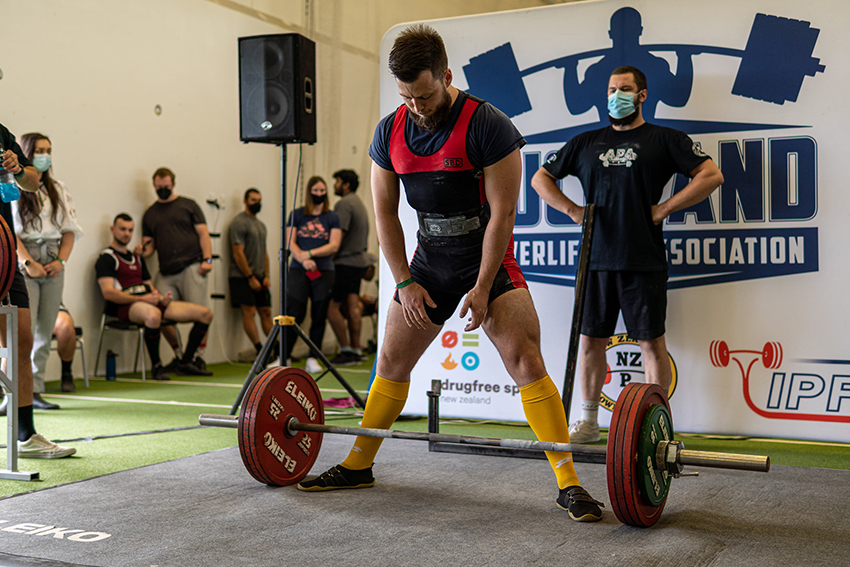
- New AUT research has found taking carbohydrates before a high-volume, upper-body weights session had no effect on how much training was done.
- However, preliminary results indicate that high-volume lower body workouts do benefit from taking carbohydrates due to the larger muscles involved.
- The researcher says just turning up and doing a workout yields almost all the benefit - but if you haven’t eaten or are planning a longer or more demanding lower-body workout, carbohydrates can help.
Do carbohydrates actually help athletes' gym performance? AUT's Andrew King, himself a weightlifter, tested the theory for his PhD thesis.
Eating carbohydrate before and during exercise has a longstanding reputation within sport nutrition, and for good reason. Carbohydrate is a key metabolic fuel that can produce energy fast enough to support moderate- to high-intensity exercise.
Consider elite endurance events like the Tour de France, where teams have experts managing athletes’ diets to ensure sufficient fuel (carbohydrate) is available to perform at the highest level.
You also may have seen athletes swish a solution around their mouth before spitting it out. Receptors in the mouth can sense carbohydrate and signal areas of the brain associated with reward, motivation and motor output, possibly supporting performance without needing to ingest it.
Together, there are clear metabolic and neural reasons why carbohydrate might enhance exercise performance. But what about lifting weights, or what researchers call resistance training?
Common carbohydrate recommendations applied to lifting have been borrowed from endurance exercise, which is typically continuous, prolonged, and energetically demanding.
Resistance training is different: it is generally high-intensity and intermittent, with short bouts of exercise separated by periods of rest, and sessions are often shorter.
This raises an important question: is eating carbohydrate before or during lifting necessary to get the most out of our performance? As a competitive powerlifter myself, and having coached world champion powerlifters, I was motivated to find out.
First, we surveyed what athletes who predominantly lift weights do in practice. Competitive powerlifters generally followed a flexible approach to their diet while paying particular attention to nutrition around training. Most emphasised eating carbohydrate before training and protein afterwards, broadly aligning with current sport nutrition recommendations.
But do those strategies improve performance? Using existing research investigating carbohydrate and weight training, we statistically synthesised the results. Eating carbohydrate before or during training produced a small improvement in the total amount of training people could complete in a session.
Importantly, carbohydrate was more likely to help when people had gone eight hours or longer without eating. Session duration also mattered; the benefit was more apparent when training lasted longer than 45 minutes.
We then put some of these ideas to the test by comparing three liquid breakfasts.
Two contained the same amount of calories and protein but very different amounts of carbohydrate: the high-carbohydrate breakfast provided 1.2 g per kilogram of body weight, four times the 0.3 g per kilogram provided by the low-carbohydrate breakfast. These were made from commercially available meal powders, with additional ingredients (maltodextrin for more carbohydrate, butter powder for more fats) used to match their energy and protein content.
The third breakfast was a virtually calorie-free placebo made from water, vanilla flavouring and guar gum – a thickener commonly used in foods such as ice cream.
The liquid breakfasts were matched as closely as possible for taste and texture, so participants didn’t know which one they were receiving.

Despite the differences in carbohydrate content between the three breakfasts, we detected no differences in the amount of training participants completed during a high-volume, predominantly upper-body weights session.
So how do we reconcile this with the small benefit seen across the wider literature? Context matters.
Upper-body training uses less total muscle mass than lower-body exercises and may therefore be less sensitive to carbohydrate availability.
Our preliminary lower-body research supports this. During a high-volume session, participants depleted 50-77% of their muscle glycogen – the carbohydrate stored within our muscles – and generally completed more training when eating carbohydrate before training.
These findings demonstrate just how carbohydrate-demanding some weight-training sessions can be.
So, what does this mean for someone heading to the gym? You probably don’t need to obsess over carbohydrate before every training session, as just turning up and doing the session yields almost all the benefit.
But if you haven’t eaten for eight hours or more, you’re planning a longer session, or you’re completing a demanding lower-body workout, carbohydrate can offer a small performance advantage.
For these sessions, around 20-30 g of carbohydrate before or during training provides a practical starting point – approximately the amount found in a banana or sports gel.
Ultimately, eating carbohydrate before every gym session isn’t essential, but if you care about a small performance advantage, it can have value.
This article was written by Andrew King about their research Acute Carbohydrate Strategies for Resistance Training Performance. It was originally published in the Sunday Star-Times Brainwaves feature. Read the original on The Post.
Useful links
AUT supports the role our academics play as critic and conscience of society, as set out by the Education and Training Act 2020.
Our approach to academic freedom and freedom of expression is set out in our Charter of Academic Freedom which was developed and endorsed by the AUT academic community.