Beyond the dental chair: improving dental care for people with cerebral palsy
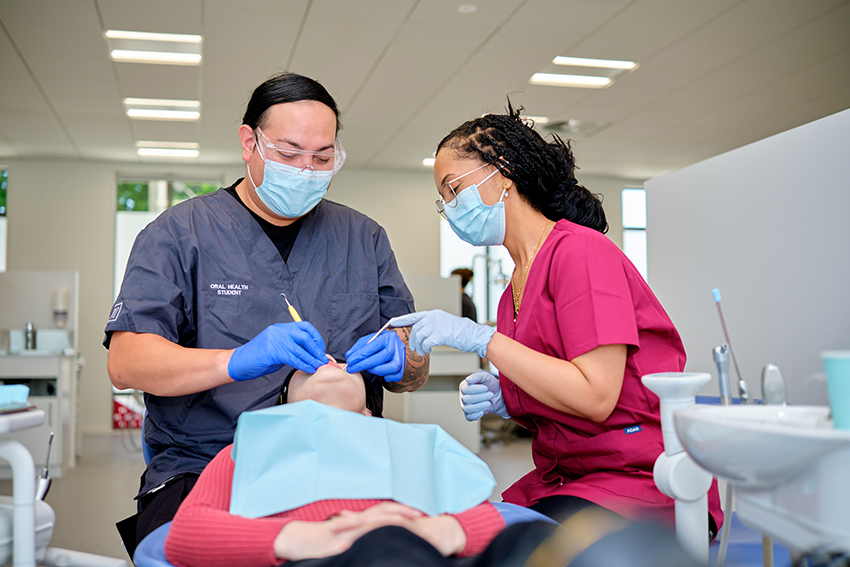
If dental professionals use inclusive language and focus on the quality of life of their patients, it can make a huge difference for people who live with cerebral palsy.
This is what Dr Karen Lansdown told host Mike Kilpatrick on AUT’s Hey, Did You Know? podcast recently.
“I think sometimes we get so busy that we forget that the people we’re seeing in the dental chair are human and have lives,” she says.
“I don’t think anyone intends to offend, but we sometimes do that unintentionally and so if we can find ways to be more inclusive, I think that’s an important part of our daily interactions with people.”
Dr Lansdown says dental professionals too often use language that is not inclusive, such as the term “special needs dentistry”.
“It’s just one of those things that’s always been that way, but in actual fact, for some families that’s not something that sits well with them.”
Dr Lansdown’s doctoral research explored oral health outcomes, barriers to dental care, and access to inclusive dental services for people with cerebral palsy. Informed by both academic research and lived experience, this topic is close to her heart as the parent of a child with cerebral palsy.
“One day, his central incisor, his front tooth, had drifted so far that it was kind of out the side of his mouth. Kids were thinking he looked like Goofy, and so he was getting teased about that,” she says.
“I spoke to one of the orthodontists and I said: ‘Can we do something about this?’ They said: ‘Well, let’s just wait and see.’ And I posed the question: ‘What about his quality of life?’ The orthodontist said: ‘I’d never even considered that.’”
Dr Lansdown says there needs to be a greater awareness of using strengths-based language to foster a sense of belonging.
In the end it’s about person-centred care, connecting with the person that you are sitting with, she says.
Time pressures can make this difficult, she says, but if professionals can find common ground, they can create a safe space that enables trust, discussion – and better outcomes.
Useful links
AUT supports the role our academics play as critic and conscience of society, as set out by the Education and Training Act 2020.
Our approach to academic freedom and freedom of expression is set out in our Charter of Academic Freedom which was developed and endorsed by the AUT academic community.