Animating extinct megafauna
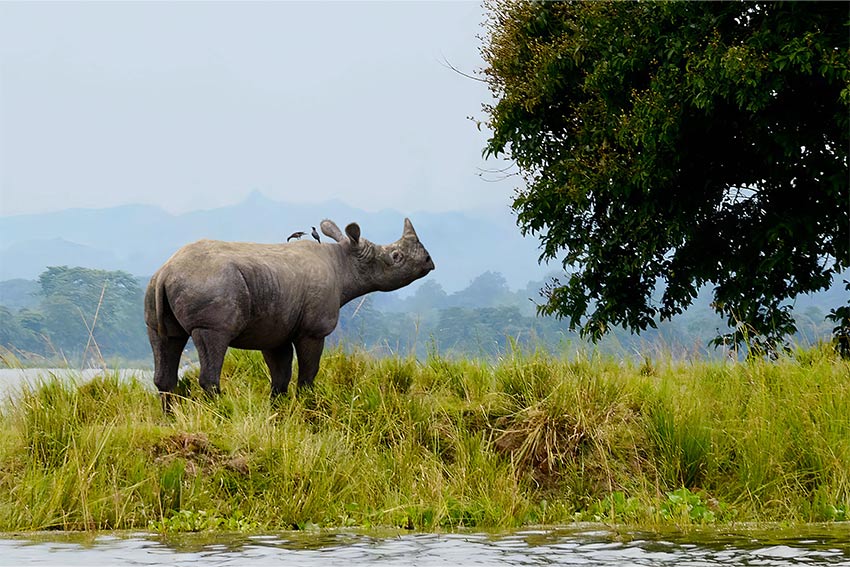
For animator and academic Dr Jason Kennedy, palaeoart isn’t just a hobby.
Creating 3D images of prehistoric animals sits at the intersection of science and art, combining fossil analysis, comparisons with living species, and digital modelling to bring long-extinct creatures back to life.
And now, Dr Kennedy and palaeontologist Aravinda Ravibhanu Sumanarathna have published a paper that details the use of 3D animation to create scientifically credible palaeoart of two extinct Sri Lankan megafauna: Rhinoceros sinhaleyus and Palaeoloxodon namadicus sinhaleyus, one of the largest mammals to ever walk the Earth. They hope the work will encourage others to follow suit.
“Think of the Ice Age films, but backed by science,” Dr Kennedy says.
“When reconstructing these animals, every decision we made was based on available evidence and informed inference.
“The one thing you cannot do as a palaeoartist is design something just for the sake of making it look cool. It’s all got to be linked to the science.”
Later this year, Dr Kennedy will create 3D animations of the prehistoric species. In doing so, researchers will be able to show posture, locomotion, and behaviour in action.
“This makes it useful not just for research, but also for museum interpretation, education, and public engagement,” Dr Kennedy says.
The current images are the first visual updates of these animals in 70 years, and the first to use 3D animation techniques to reconstruct them.
By documenting the design process, the researchers hope to make the communication process between palaeontologists and palaeoartists more transparent, especially when using 3D animation to collaborate.
“This research also adds to a small but growing range of research toward establishing best-practices, robust methodologies, and peer-review for palaeoart itself,” Dr Kennedy says.
“This means the images that illustrate new fossil discoveries will be held to a similar level of scrutiny as the published science, which sets a higher standard for how extinct life is shown to the public.”
The paper, Toward an interdisciplinary 3D animation design process for palaeoart: Visualising Quaternary megafauna from Sri Lanka’s Sabaragamuwa Basin, published in the journal Palaeontologia Electronica, also provides a model for future scientist-palaeoartist collaborations.