Q&A: Māori Business Matters
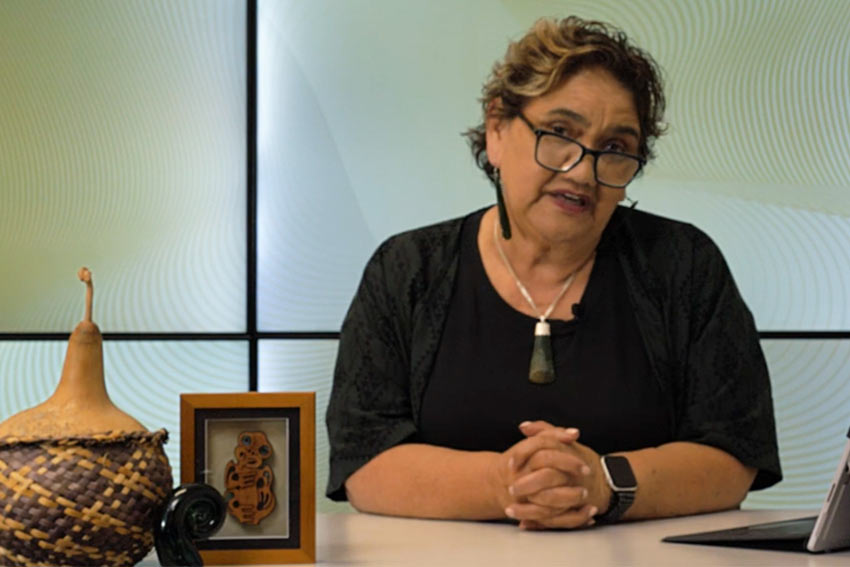
How do Māori enterprises contribute to Aotearoa’s economy? Join AUT Ahorangi Professor Emerita Ella Henry to find out why Māori Business Matters.
What are Māori businesses and how are they different from non-Māori businesses?
Māori businesses reflect a unique and distinct culture as the Indigenous peoples of Aotearoa New Zealand. Māori society is traditionally egalitarian and collective, favouring relational leadership. This is reflected in businesses that tend to be flatter, less hierarchical, more informal, and strongly family-oriented. In contrast, many non-Māori businesses are more hierarchical, have stronger divisions of labour, and often place greater emphasis on profit rather than collective wellbeing.
What is tikanga and why is it important for Māori business?
Tikanga comes from the word ‘tika’, meaning to be right, good, and fair. Tikanga is how goodness and rightness are enacted. Traditional Māori culture relied on tikanga rather than formal laws to guide behaviour and relationships, and these values carry into business. This includes practices such as pōwhiri (welcome), karakia (invocation), whanaungatanga (building kinship relationships), and kaitiakitanga (stewardship of the environment). Tikanga shapes how Māori businesses operate holistically, integrating spiritual, cultural, social, and physical wellbeing.
What’s the deal with controversies around the ethical production and marketing of Mānuka honey?
The word ‘Mānuka’ is a Māori word that carries deep cultural knowledge connected to the unique properties of the tree. It was a Māori gift to Aotearoa New Zealand and was never gifted to Australia. The controversy arises when Australian producers use the word without acknowledging its Māori origins, effectively appropriating Māori language, knowledge, and cultural value.
How much does Māori business contribute to the New Zealand economy?
As at 2025, the Māori economy is estimated to be worth around $70 billion, with projections to reach $100 billion by 2030. This represents approximately 18% of New Zealand’s 2024 GDP, broadly in line with the Māori population percentage. Māori are contributing equally to the economy, countering harmful stereotypes that portray Māori as economically dependent. Māori businesses contribute in ways that also uphold cultural identity, values, and collective wellbeing.
What would you say to someone who claims iwi business holdings have had an unfair advantage?
Treaty settlements were not windfalls. For example, Ngāi Tahu were promised retention of 10% of the South Island land they sold under force, which never occurred. If Ngāi Tahu had received 10% of the land as promised, they would have been multibillionaires. Instead, when their claim was settled, they received recompense equivalent to the value of a single small farm. The transformation of roughly $160 million into a $2 billion asset base over 25 years is evidence of strategic leadership and capability. Importantly, wealth is reinvested in people through initiatives like direct distributions to rūnaka and KiwiSaver accounts for newborns. This reflects the core purpose of Māori business: creating intergenerational wellbeing.
How can I tell if a business is genuinely Māori or just using Māori culture as a marketing tool?
Some businesses misuse Māori language and imagery without meaningful engagement. Authentic organisations, whether Māori-owned or not, work with Māori communities, advisors, or partners. These partnerships produce credible narratives and stronger products. Those who appropriate culture without accountability risk serious backlash when exposed.
What’s the best way to find and support Māori businesses near me?
A great starting point is Whāriki, the national Māori business network. They host events and connect people with Māori businesses across the country. In smaller or rural communities, approaching a local marae respectfully and introducing yourself is another meaningful way to engage and build relationships.
What could non-Māori businesses learn from Māori business?
Māori businesses are grounded in values of kinship, community, sustainability, and care. Businesses that operate for people, community, and the environment — not just profit — reflect these same principles. Māori business shows that economic success and social responsibility are not mutually exclusive.
What’s your favourite Māori business?
All Māori businesses make valuable contributions, but some stand out personally. Chelsea Winstanley and Tweedie Waititi’s work translating Disney films into te reo Māori demonstrates how profit and cultural revitalisation can coexist. Te Hiku Media, led by Peter-Lucas Jones, is globally recognised for innovation in digital technology and AI, proving Māori businesses can lead on the world stage while remaining grounded in community purpose.
How can Māori collectivism coexist with the traditional focus on the bottom line?
Profit-first thinking is a relatively recent concept in human history. For most of our existence, economies supported communities rather than exploiting them. Māori business prioritises a quadruple bottom line: financial, cultural, social, and environmental outcomes. When all four are considered, business becomes meaningful and sustainable.
Are other countries taking similar approaches to Indigenous business?
Indigenous economic resurgence is occurring globally, particularly in settler states such as Australia, Canada, some parts of Latin America and the United States. These communities are revitalising language, culture, and economic systems. Many international Indigenous groups look to Māori for leadership in business, language revitalisation, and political strategy. Collaboration across Indigenous nations is increasingly vital, especially in addressing global challenges like climate change and social division.
AUT supports the role our academics play as critic and conscience of society, as set out by the Education and Training Act 2020.
Our approach to academic freedom and freedom of expression is set out in our Charter of Academic Freedom, which was developed and endorsed by the AUT academic community.