Protein rises to top of food pyramid

New dietary guidelines from the US have upended the traditional food pyramid, moving protein into the spotlight.
Putting protein at the top is a good thing, says AUT Professor Caryn Zinn.
An internationally-recognised dietitian and author of several books about nutrition, Zinn is an advocate of the whole food, carbohydrate-reduction approach, with a strong focus on improving metabolic health.
She says, while flipping the food pyramid has caused some confusion, the changes themselves are largely positive, putting protein, dairy, healthy fats, vegetables and fruits at the top of the pyramid, with whole grains at the bottom and removing sugars altogether.
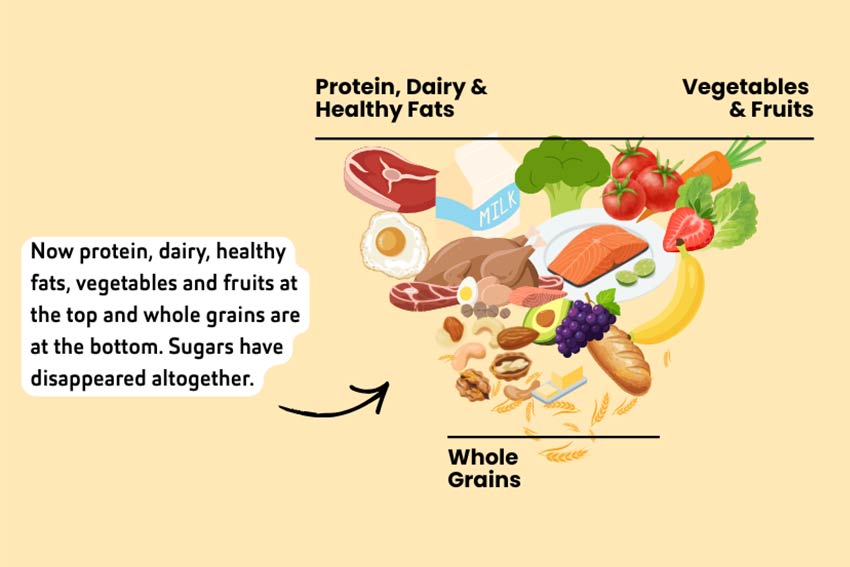
"There’s an emphasis on whole, real food over ultra-processed foods; a strong message that no amount of added sugar is considered nutritious; the prioritisation of protein, including a boost in the recommended daily intake and focus on animal proteins as opposed to plant-based; plus a reduction in the recommended daily servings of grains.”
Those are all positive moves, she says, but what is controversial is the recommendation of full-fat dairy and animal fats.
“The guidelines suggest keeping saturated fats under 10 percent of total calories but it's highly unlikely that someone could eat fatty meats, full-fat dairy and butter as suggested and still keep their saturated fat intake at that level.”
Zinn says the new US Dietary Guidelines are the first time that carbohydrate reduction has been formally recognised as a potential management strategy for people with certain chronic conditions. “This is a major step toward recognising insulin resistance as a root driver of disease and legitimising evidence-based dietary treatments that target it.”
She also says some of criticism of the new pyramid has focused on alleged conflicts of interest (COIs) among members of the Scientific Foundation – a newly-commissioned expert group that produced a supplementary report alongside that of the Dietary Guidelines Advisory Committee (DGAC) - particularly their ties to the dairy and meat industries.
“However, this overlooks two important points. First, this is the first time in the history of the Guidelines that COIs have been voluntarily and transparently disclosed by authors, which is a clear step forward for accountability.
“Second, critics rarely acknowledge the substantial COIs present in the DGAC, particularly with ultra-processed food and pharmaceutical industries. A peer-reviewed analysis of the 2020 DGAC found that 95% (19 of 20) members had COIs with food and/or pharmaceutical companies, including Kellogg’s, Abbott, Kraft, and General Mills.
“In summary, much of the criticism directed at the Guidelines fails to be fair or balanced, often overlooking that the recommendations are evidence-based, just not grounded in the same mainstream models that have dominated for decades and coincided with a dramatic rise in chronic disease.”
Useful Links
- Physical Activity and Nutrition - Research - AUT
- Caryn Zinn | Mōku | About | Auckland University of Technology
- Caryn Zinn Nutrition
AUT supports the role our academics play as critic and conscience of society, as set out by the Education and Training Act 2020.
Our approach to academic freedom and freedom of expression is set out in our Charter of Academic Freedom, which was developed and endorsed by the AUT academic community.