Iti Kōpara enters its second year
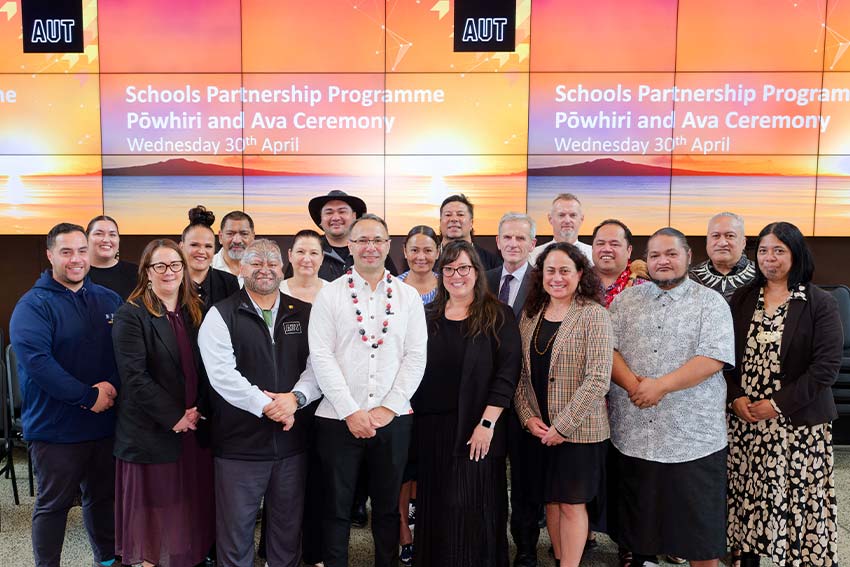
For some students, the journey to university can feel distant or out of reach. Iti Kōpara – AUT’s Schools Partnership Programme – is changing that.
Through sustained, culturally grounded support that is delivered in partnership with schools and whānau, Iti Kōpara is now entering its second year with a renewed focus on helping students build confidence and strengthen academic achievement on their way to a university education.
What is Iti Kōpara?
Iti Kōpara is a free, multi-year initiative run by AUT that supports Māori and Pacific students to achieve academic success and progress confidently towards tertiary study.
Delivered in partnership with seven secondary schools across Tāmaki Makaurau, the programme helps students become familiar with university life, understand their study and career pathways, and strengthen NCEA achievement towards University Entrance.
At its heart, Iti Kōpara is about early, sustained engagement – building confidence, capability and aspiration well before students make the transition to university.
Students selected for Iti Kōpara receive three years of dedicated, wraparound support from Year 11 to Year 13. The programme combines on-campus AUT experiences with in-school delivery, tailored to each year level.
Throughout the life of the programme, AUT’s team of experts support and empower students to achieve their future career aspirations and meet students where they are - recognising their unique strengths, interests and whānau as central to their success.
Students in the programme:
- Connect with students and AUT staff, working together towards a shared vision of success
- Gain inspiration and advice from university students and graduates who share their own stories
- Receive additional support and guidance from AUT advisors as students navigate Year 11 to 13
- Access NCEA academic workshops to build skills for university and prepare for their career
- Explore diverse career pathways to shape their future
Successes and celebrations
Overall, students in the Iti Kopara programme achieved outcomes that consistently exceeded national Māori, Pacific and Equity Index benchmarks, particularly in literacy and numeracy.
However, the programme’s success is measured not only by achievement data, but by its impact on students’ confidence, aspirations and sense of possibility.
As one female Pacific student from Kelston shared: “I had never thought about university before and don’t know anyone who has gone. Now I want to be the first in my family to go to university.”
Why Iti Kōpara matters
The programme responds directly to long-standing data across secondary and post-secondary education showing structural inequities for Māori and Pacific learner, including that for more than a decade, Māori and Pacific students have achieved University Entrance at half the rate of their peers.
AUT’s Chief Marketing Officer, Jayne Mayerhofler, said Iti Kōpara reflects AUT’s commitment to Te Aronui by actively removing barriers and creating genuine pathways into higher education.
“This is a wicked problem that demanded more than acknowledgement – it required action," Jayne said.
“Iti Kōpara was born out of a responsibility to widen access and create equitable opportunities for those who we had identified as needing it most. By co-designing the programme with our partner schools, we are supporting learners to build confidence, capability and sense of belonging they need to thrive at university and beyond.”
Looking ahead to 2026
AUT Schools and Community Partnership Leads Maria Sevao and Anita Heffernan said the programme is now poised to enter its second year with renewed focus and momentum.
“The year ahead will see the introduction of new initiatives designed to deepen the focus of our foundation, which is to Seek, Understand and Navigate,” Maria and Anita said.
“These developments reflect AUT’s ongoing commitment to a values-based programme that is culturally grounded and responsive to the needs of our communities and the aspirations of our Māori and Pacific students.”