AUT hosts talk on future of health
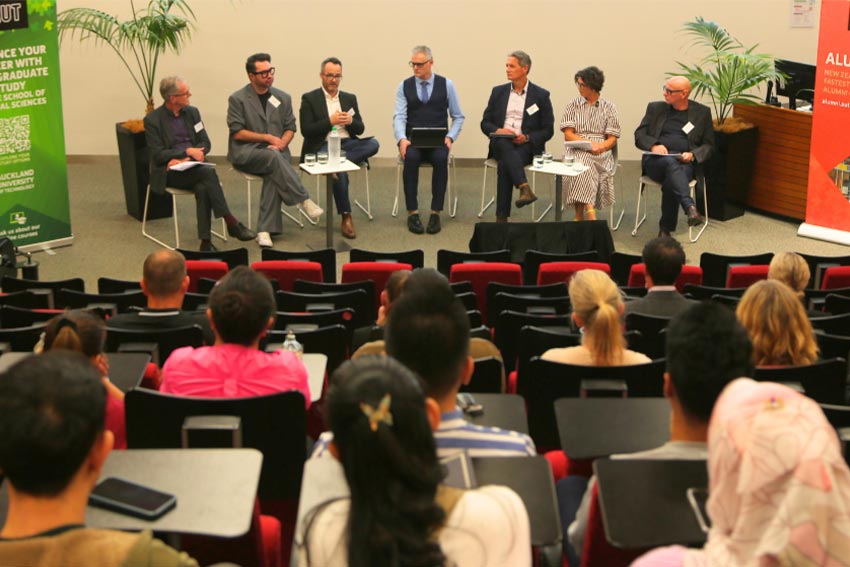
AUT hosted health leaders, practitioners and alumni at its Future of Health event on 17 February at the North Campus, bringing together perspectives from across the sector to explore how technology, research, equity and people are reshaping care in Aotearoa.
As the country’s largest provider of health graduates, AUT plays a significant role in shaping the future health workforce.
The event underscored the value of continued conversations and collaboration across government, education, industry and communities, and highlighted the need for shared approaches to the challenges facing the health system.
Professor Matthew Carroll, Head of AUT’s School of Allied Health, says that the event was an opportunity to acknowledge how quickly health is changing.
“Health is changing fast, and so are the expectations. Today, we will explore how technology, research, equity and people will redefine care in the years ahead,” he says.
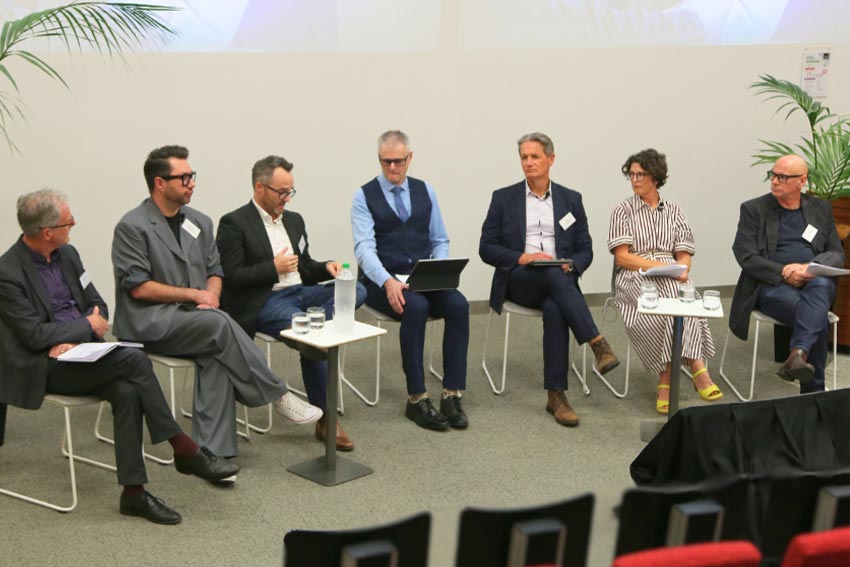
The panel brought together leaders from across Aotearoa’s health sector, including AUT alumni Dr Martin Chadwick, Chief Allied Health Professions Officer at Ministry of Health Manatū Hauora, Mark Rainford, Vice President of Product Strategy at Orion Health, and Dean Cowles, Head of Hauora Māori and Cultural Safety at Southern Cross Healthcare.
They were joined by Professor Brett Cowan, Pro Vice‑Chancellor and Tumuaki/Dean of AUT’s Faculty of Health and Environmental Sciences, Associate Professor Rachel Macdiarmid, Acting Head of AUT’s School of Nursing, and James Baxter, Clinical Director at Foot Mechanics Group and
Board Member at PodiatryNZ.
Mark Rainford says that artificial intelligence will increasingly influence clinical decision making.
“Embedding decision support seamlessly into clinical workflow is what I am most excited about. There’s a lot of latent potential to make a difference to healthcare in the next ten years both to clinicians and patients,” he says.
Dr Martin Chadwick says that technology must strengthen the human experience at the centre of care.
“We are the professions that are longitudinal. We are not transactional in the work we do. If the busyness can be removed, what we can bring is empathy and compassion,” he says.
Associate Professor Rachel Macdiarmid says that equitable access to digital tools is essential for preparing the future workforce.
“Students have a varied range of access to the digital tools we develop, and we need to make that equitable for people who are accessing it,” she says.
Professor Brett Cowan says that cultural understanding must remain at the heart of practice.
“Healthcare is a human interaction. We really value the humanity of healthcare delivery, and people relate to those who understand their cultural context,” he says.
Dean Cowles says that coordination across providers will be increasingly important as patients move between public and private care.
“There needs to be greater avenues for collaboration and codesign,” he says, noting the increasing number of patients who navigate both public and private services.
James Baxter says that administrative load continues to place pressure on the workforce.
“The biggest source of burnout is actually administrative load,” he says.
The panel discussion was followed by a digital Q and A session and networking opportunities, allowing attendees to continue the conversation and build connections across the sector.
Professor Brett Cowan says that partnership is central to improving health outcomes for Aotearoa.
“Delivering better health outcomes for New Zealand requires education, government, industry and communities working together.
As New Zealand’s university of technology and opportunity, AUT is committed to leading in that partnership and preparing graduates who will contribute to a healthier future for all,” he says.