AUT and the growth of NZSL interpreters
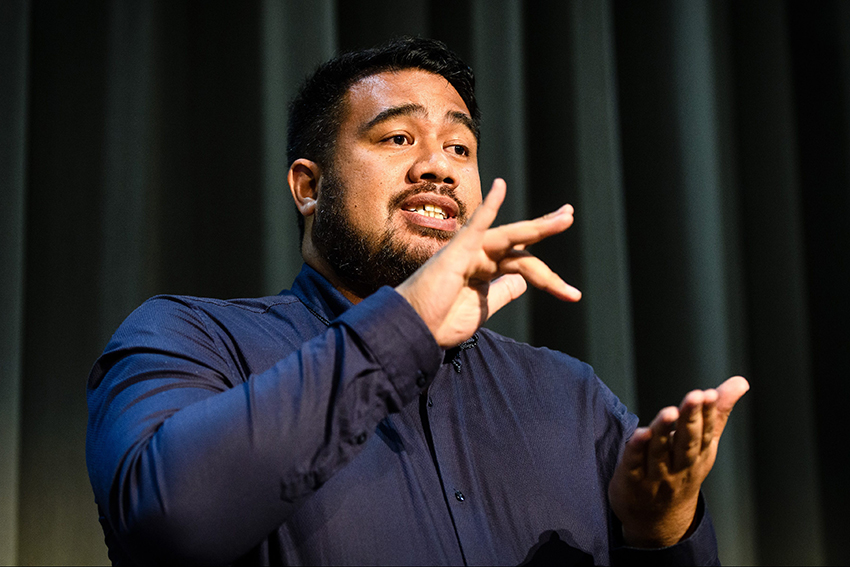
The training of signed language interpreters bridged the Deaf community with wider society and increased the visibility of NZSL as a language deserving of recognition.
This is the view of Dr Rachel McKee and Dr David McKee who together started the Diploma in Sign Language Interpreting at AUT in 1992 when it was the Auckland Institute of Technology.
“At the time, the Deaf community was starting to assert its identity after the damaging legacy of speech-only education and the denigration of sign language,” Dr Rachel McKee says.
“Deaf Pride was emerging internationally and there was growing recognition that sign languages, including NZSL, are bona fide languages.”
Prior to the two-year diploma, the formal training of interpreters had only happened with a one-off course at Auckland Teachers’ Training College in 1985, she says.
The diploma soon became the qualification needed to work as a sign language interpreter in NZ.
Dr Rachel McKee says the availability of trained professionals allowed for an interpreting service which expanded Deaf people’s access to everyday situations and gave them greater political voice.
“The formal training of interpreters at AUT generated critical language awareness of NZSL in the Deaf community, which was important to validating their claim to be regarded as a language community.”
Dr David McKee says the teaching of NZSL and interpreters empowered the Deaf community, increasing awareness of Deaf identity and enhancing the capacity for advocacy.
It has also opened pathways to higher education and professional employment, as well as increasing access to education, services and events.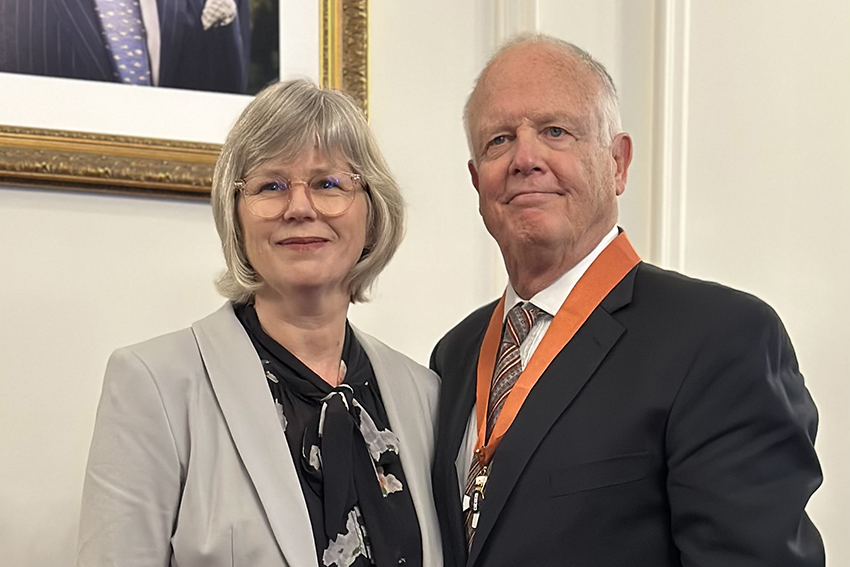 DR RACHEL MCKEE AND DR DAVID MCKEE (CNZM).
Dr Rachel McKee says there were several challenges with teaching NZSL interpreting in the 90s, including a lack of non-Deaf students fluent in NZSL, and cumbersome video technology to use for interpreting practice.
Another difficulty was a lack of teaching and learning resources, with the first formal NZSL dictionary not published until 1997.
AUT Senior Lecturer Susie Ovens has taught NZSL and interpreting at AUT since 2001. She says the 1992 programme at AIT was community centred. She attended a highlight of the early years: the programme’s first NZSL camp, held in Albany, and remembered by many as a significant moment.
“The camp created intensive immersion, strong bonds between Deaf tutors, Deaf friends, and hearing students,” she says.
“It was a really memorable experience – lots of drama, NZSL storytelling, outdoor activities, and learning how to communicate visually while doing things together. I contributed by doing some storytelling and, very briefly, aerobic instruction in NZSL – which still makes me laugh when I think about it.”
How NZSL-English interpreting is taught now at AUT
In 2011 the diploma became a major in AUT's Bachelor of Arts and remains the only way to become qualified to work in the field.
Senior Lecturer George Major says the programme is intensive, with new students needing to learn NZSL (often from beginner level), Deaf Studies and interpreting in only three years.
“We are so proud that every day we get to continue the legacy that began back in the early 90s,” Dr Major says.
“Even though we now have access to amazing technology, resources, and learning support, the heart of our programme is still – and will always be – our partnership with the Deaf community."
Lecturer Rachel Coppage says Deaf Studies is essential for NZSL interpreters because one cannot learn or appreciate a language without understanding the culture.
“Deaf Studies provides a space for critical thinking, and an invitation to view the world differently and foster deeper social cohesion."
AUT is looking to offer a new final-year course focused on Māori and educational interpreting settings, being developed in partnership by the teaching team and community members, and led by Lecturer Rebekah Guy.
“We’re very thankful for the support and expertise of a core group of Te Rōpū Kaitiaki, Turi (Deaf) Māori, Māori NZSL and educational interpreters in creating this course with us,” she says.
“Together, we are contributing to improving the access of Turi Māori to Te Ao Māori, and to the wellbeing and sustainability of NZSL interpreters.”
Celebrating 20 years
This year the country is celebrating 20 years since NZSL was made an official language.
Former Lecturer Lynette Pivac (MBE) worked at AUT from 1992 to 2018 and travelled to Wellington to be there when the Bill was voted on.
“We were all up in the gallery at Parliament, watching the action below. Ruth Dyson was the MP who had been a champion for the NZSL Bill and it was now at its third reading,” she says.
“The vote in support of the bill was almost unanimous, with only two opposing votes. It was approved! All of the Deaf community in the gallery celebrated – hugging, cheering, stamping and making a lot of noise, which may have taken the MPs by surprise.
“After that, I went to Government House to witness the Governor General signing the NZSL Bill into law, to become the NZSL Act. I will never ever forget that day, we witnessed history-making in New Zealand, and it was the result of so many years of lobbying by the Deaf community."
Useful links
- NZSL Week resources
- SignDNA Deaf National Archive New Zealand
- NZSL team wins national award
- Study NZSL-English interpreting at AUT
AUT supports the role our academics play as critic and conscience of society, as set out by the Education and Training Act 2020. Our approach to academic freedom and freedom of expression is set out in our Charter of Academic Freedom [PDF, 175.9 KB], which was developed and endorsed by the AUT academic community.