AI in luxury hospitality
This article was written by AUT Associate Professor Tracy Harkison and first published in Hospitality Insights.
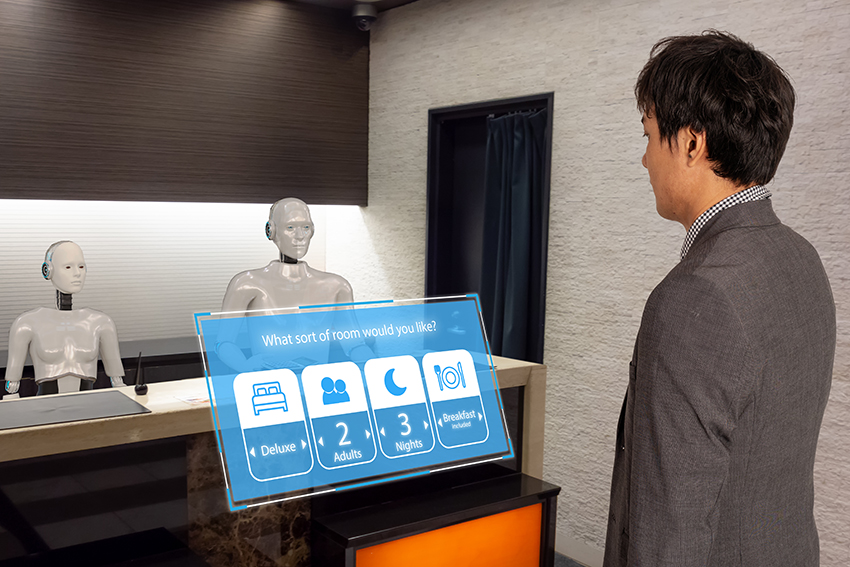
The luxury hospitality sector is being transformed by AI, driven by the need to enhance guest experience, improve operational efficiency, and address labour shortages.
However, this transformation challenges the traditional, human-centric model of service in luxury hospitality.
Technologies such as chatbots, virtual concierges, and predictive analytics allow for the customisation of services by analysing guest preferences, creating a highly personalised experience.
This efficiency, combined with being able to operate 24/7, strengthens the case for widespread adoption in the industry, but what does this mean for the human-centric service that luxury hospitality is built on?
There is no doubt that AI enhances efficiency by automating routine tasks: check in/out, room service, and billing, allowing staff to focus on more complex and personalised guest interactions.
This not only improves the guest experience but also reduces operational costs, leading to more effective resource allocation.
AI-driven systems can process vast amounts of data, enabling establishments to quickly adapt to changing preferences and market trends, which is crucial in the competitive luxury sector.
However, some argue that the human element characterised by warmth, empathy, and personal connections, is irreplaceable in luxury hospitality.
These qualities form the essence of the guest experience, and they remain difficult for AI to replicate. Traditional luxury hospitality focuses on anticipating unspoken wishes and providing memorable experiences through meaningful human interactions.
In contrast, AI delivers consistent service quality, addressing the variability that human service often experiences due to employee turnover, training differences and other factors.
In the luxury sector, where perfection is expected, AI’s ability to learn and improve continuously is invaluable.
Nevertheless, human qualities such as emotional intelligence, intuition, and an understanding of human nature are still required — aspects that AI cannot presently emulate.
Some critics warn that over-reliance on AI could erode the personal touch that distinguishes luxury hospitality.
While AI is efficient in managing routine service tasks, it may fall short in resolving complex issues requiring empathy, creativity, and nuanced judgment, all of which are essential for creating unique luxury experiences and fostering loyalty.
Furthermore, excessive reliance on technology could result in a more transactional, less emotionally satisfying luxury experience for guests.
However, AI is here to stay and could redefine luxury hospitality.
The challenge now is to blend the precision of AI with the warmth of human interaction, offering the sector powerful new ways to enhance the guest experience.
An example of this could be guests being welcomed by name, having their preferred room pre-selected with ambient settings adjusted to their liking, and their favourite welcome drink already prepared. AI can ensure that all of this is anticipated and delivered consistently.
Meanwhile, staff informed by these AI insights, can focus on delivering high-touch, intuitive service — engaging with the guests in meaningful ways, offering spontaneous upgrades, personalised recommendations, and responding empathetically to their needs in the moment.
This approach could add exceptional value in the luxury hospitality sector by elevating both consistency and emotional resonance.
The use of AI could empower staff to focus on moments that truly matter, while eliminating inefficiencies and errors. The result could be a luxury guest experience that feels effortless yet deeply personalised — reinforcing the brand’s identity as both innovative and authentically human.
This would not only improve operational flow but also deepen guest loyalty and differentiate luxury hospitality.
Those who adopt this blended approach could balance efficiency and human connection to their advantage.
Useful links
AUT supports the role our academics play as critic and conscience of society, as set out by the Education and Training Act 2020. Our approach to academic freedom and freedom of expression is set out in our Charter of Academic Freedom, which was developed and endorsed by the AUT academic community.