Sofie Heaphy
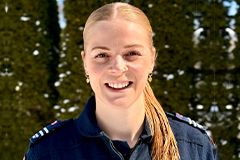
Critical Care Paramedic, Ornge, Ontario, Canada
Postgraduate Diploma in Health Science in Paramedicine
Bachelor of Health Science in Paramedicine
She knew she wanted to be a paramedic ever since she was seven years old, says Sofie Heaphy, who came to AUT to study a Bachelor of Health Science in Paramedicine, followed by a Postgraduate Diploma in Health Science specialising in critical care paramedicine.
“I’ve always wanted to make an impact where I could, so this career path felt right. I grew up in St John Youth and was lucky enough to represent New Zealand at the International Youth Competitions in Sydney, where we came out on top. In my final year of high school, I had my mind set on studying at AUT, even though financially it was going to be a challenge coming from a rural town in the South Island. I was really grateful to receive an AUT Significant Student Scholarship. I was the first in my family to leave the West Coast to pursue tertiary study, and they were incredibly proud of me. My community was also behind me and supported me with scholarships including from Buller Electro Services Ltd, Holcim and the West Coast DHB.”
It was a journey that was well worth it, and she still has many fond memories of her time at AUT.
“The staff in the paramedicine programme felt like family and genuinely cared about us. There were also a lot of clinical placements, which were hugely beneficial in shaping me as a clinician. I enjoyed all of them, but working in mental health facilities was a standout and gave me a much better understanding of how to communicate with and care for those patients. We also had the AUT Student Paramedics Association (AUTSPA), where we organised community-based events each year. One was a visit to the South Auckland Men’s Prison when it first opened. At the time, I didn’t realise how valuable that experience would be, but years later, when I found myself regularly attending prisons for patients, it made a real difference in how I approached that environment.
“One of the biggest highlights for me was having the confidence to speak up at the end of a class and ask if anyone would be interested in doing a medical volunteer trip overseas in our final year. After choosing a destination, 13 of us travelled to Peru during our mid-semester break. We fundraised and took a good amount of donations with us, spending two weeks in Cusco and providing healthcare to people who wouldn’t normally have access to it. I was also fortunate to be selected as the New Zealand representative for Student Paramedic Australasia and head of AUTSPA. During that time, I worked to bring a student paramedic conference to AUT, organised conferences in Melbourne and was part of the AUT Ferno Sim Challenge team, which went on to win against universities across Australia.”
Providing care in rural Canada
Now working as a critical care paramedic in Ontario, Canada, Sofie loves the positive difference she can make.
“I work across the province of Ontario, providing critical care to patients in areas that aren’t accessible by road. It’s completely different to what I was doing in New Zealand, and the experience I’ve gained so far has been invaluable. My first year was heavily focused on education, including time in Canada’s largest paediatric ICU and surgical placements in Toronto, which was an incredible learning experience. I absolutely love my job and still have the same passion I had 12 years ago on my first day of university.”
Because a lot of her work involves supporting Canada’s Indigenous communities, she frequently draws on her knowledge of Māori health, an area she actively pursued throughout her studies at AUT.
“Even though I don’t come from Māori heritage, I’ve always had a strong appreciation for the culture, especially from my time working in South Auckland. I’ve always wanted to play my part in reducing bias in healthcare and providing the best care possible for all patients. Working in remote communities in Canada has really highlighted how important that is. Indigenous communities here face similar challenges and barriers to healthcare as in Aotearoa. The cultural knowledge I gained at AUT helped prepare me for this work and I’ve even shared that understanding with colleagues here who are still learning about it.”
Advice for other students
Sofie has some great advice for other students interested in studying paramedicine.
“The three years of the degree are full-on, especially when you’re balancing clinical placements and part-time work. It can feel like a lot. Try to take every opportunity that comes your way – AUT has many of them! Join a club, go on that trip and get involved. You’ll look back and be glad you pushed yourself outside your comfort zone.”
Paramedicine isn’t for everyone, she stresses.
“You’re exposed to parts of life and society that most people never see, and it can be challenging. That’s why it’s important to know your reason for doing the job. Make sure you have strong support networks with friends and family, and have a life outside of work. Find hobbies and spend time with people who aren’t in the job. It helps you switch off and feel grounded. Build good routines around eating and sleeping, especially with shift work; know when you need a break and be aware of the signs of burnout. It’s a very rewarding career, but like any job, you need to look after yourself along the way.”