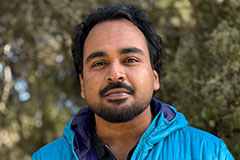
Indi Mathias

Senior Mental Health and Addictions Advisor, Whakarongorau Aotearoa
Bachelor of Health Science in Counselling
The learning environment created by the counselling staff was one of the highlights for her, says Indi Mathias who came to AUT to study a Bachelor of Health Science in Counselling.
“One of the main highlights of my time at AUT was the consistent emphasis on reflection and self-awareness in the counselling degree. This positively impacted my learning. Critical reflection was a necessity in the degree as this impacts how we practise as counsellors. It was majorly helpful as a student, but also as an emerging counsellor. It helped deepen my understanding of how theory, self and relational practice intersect, rather than treating learning as purely academic or outcome focused.
“I experienced the lecturers as genuinely engaged with students as individuals, with an ability to recognise and work to people’s strengths. I feel this relational approach to teaching modelled the values we were learning about in theory and practice, and contributed to a sense of being supported, challenged and taken seriously as developing counsellors. There was always space for dynamic discussion, an openness to our ideas, and a strong emphasis on the evolution of our learning, and relational process with clients and also peers.”
She says she felt very supported by several AUT staff members and services.
“The programme lead, Dr Joanne Blackett, played a significant role in supporting my learning and development. She consistently made time for discussion, encouraged critical thinking, and was attuned to when I needed to be stretched further or given space to reflect or process my learning. I especially appreciated being able to bring theoretical ideas related to client work or coursework to her and having them engaged with in a genuine and deep way.
“Rachel Ball was another strong source of support and contributed in similar ways. Her teaching approach was relational, reflective and grounded in practice, and I experienced her as genuinely invested in my learning and development as an emerging counsellor. The Disability Support Services team was also an important source of reassurance for me. I have ADHD, and the psychological safety of knowing that the support was there really helped me focus fully on learning.”
Making a positive impact
Now working as a senior mental health and addictions advisor for Whakarongorau Aotearoa, Indi values the diversity and immediacy of her work.
“I provide brief intervention counselling via telehealth across national services including 1737 Need to Talk and the Depression Line. The role involves responding to a wide range of presentations, from general distress and mental health concerns to high-risk and crisis contacts. The work is fast-paced and dynamic, which can also include rapid assessment, emotional containment and clear clinical decision-making within a single interaction. Each contact is different, and the role requires a high level of presence, flexibility and responsiveness.
“I also act as the mental health and addictions liaison for the coordinated care team, supporting callers who require more tailored or ongoing support. This includes direct collaboration with the team, as well as engagement with external primary health organisations and community providers, to help ensure continuity of care and a more wraparound approach where needed. I find it rewarding to work across both direct clinical practice and system-level collaboration. Acting as a liaison allows me to support not only individual callers but also the broader coordination of care.”
She says she constantly draws on the skills she developed throughout her studies at AUT.
“The skills that I learned in my degree, the hands-on experience from the placements and the relationships with my lecturers and peers have all made a huge difference and are pretty central to who I am as a counsellor now.”
Advice for other students
Indi has some great advice for other students who are dreaming of a career in counselling.
“Remain open to integrative thinking, use supervision and teaching relationships actively, and trust that professional competence develops over time through curiosity, feedback and practice. The relational learning culture at AUT is a strength, and making use of it can have a lasting impact on both your personal and professional development.”
Reflection is crucial, she adds.
“Engage fully with the reflective aspects of the programme, even when they feel challenging, uncertain or scary! Counselling training is as much about developing self-awareness and relational capacity as it is about learning theory.”