Sustainability research
Explore how we’re making an impact towards the United Nations Sustainable Development Goals (SDGs) through our research.
Sustainability research activities
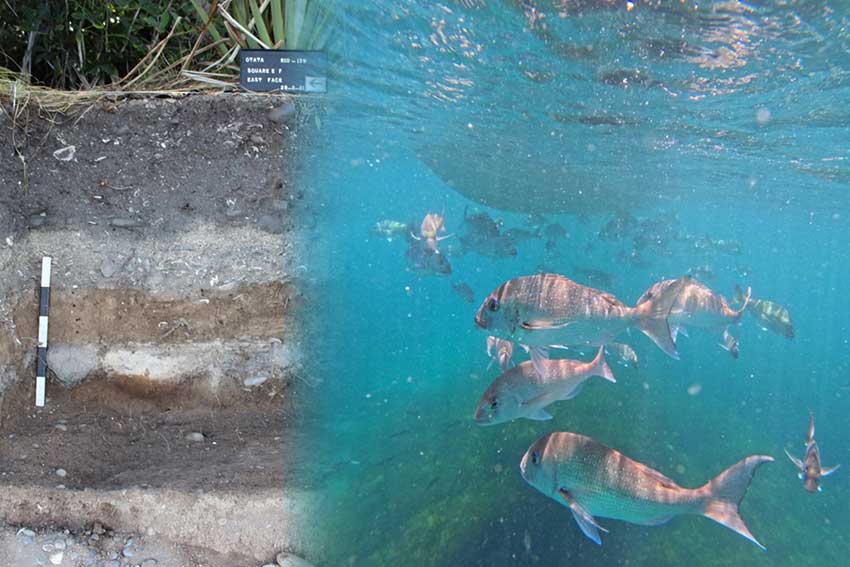
AUT and Victoria University received Royal Society of New Zealand Marsden Grant funding to establish the initiative, Nature-based Urban design for Wellbeing and Adaptation in Oceania (NUWAO).
They work with communities to co-design urban environments that are centred in indigenous ecological knowledge and nature-based solutions as a means to adapt to climate change impacts.
During 2023 they held a symposium, a design competition, generated publications, and released podcasts where many AUT academics shared their knowledge around climate issues and called listeners to action.


The School of Future Environments hosted New Zealand’s first International Group for Lean Construction (IGLC) conference in July. Lean Construction aims to improve the productivity and sustainability of the building and infrastructure industry, which currently contributes between 15%-20% of Aotearoa’s total carbon emissions.
AUT also hosted the International Conference of Smart and Sustainable Built Environment, which covered themes such as climate change adaptation, indigenous design and sustainability management, as well as sustainable supply chains.

AUT had 461 publications that contributed to one or more SDGs in 2024 (34% of all outputs). This is a significant increase from 2020 (17%) and a further increase from 2023 (30%).
Waste glass for road construction
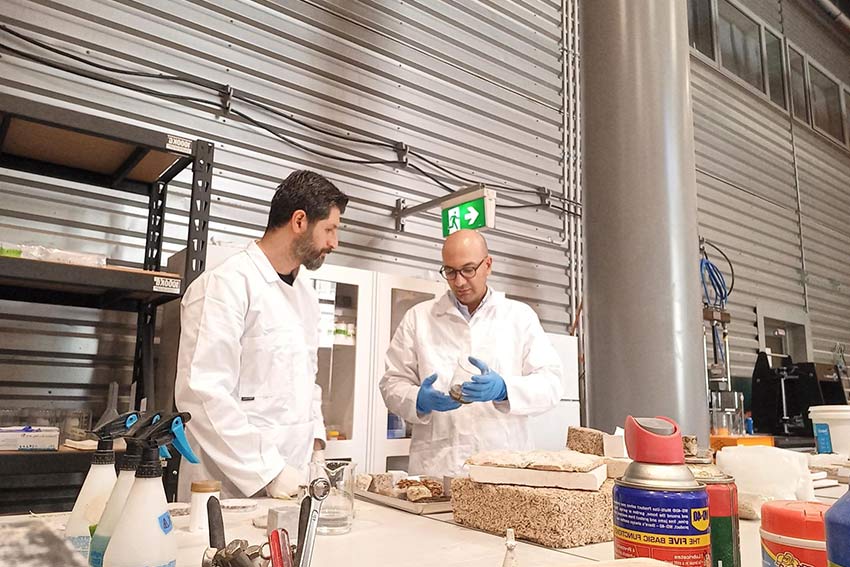
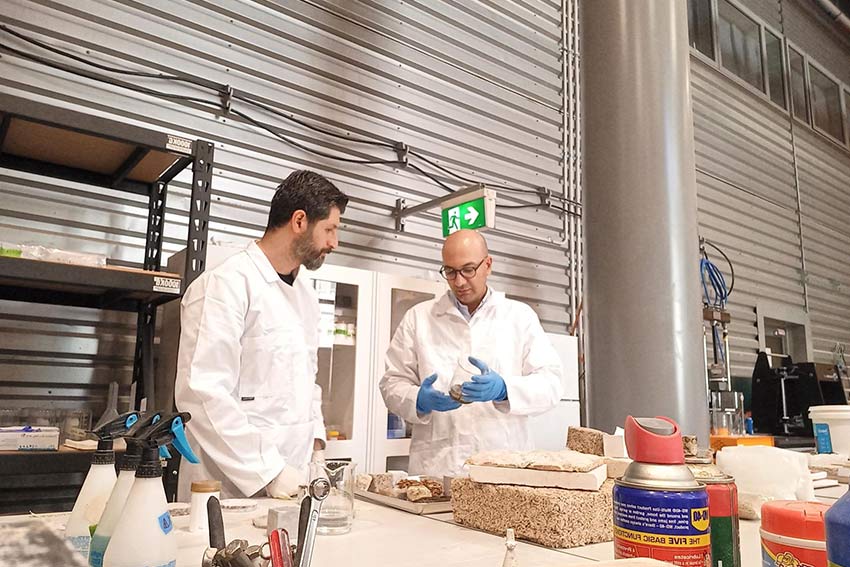
Dr Roohollah Kalatehjari (School of Future Environments) identified a sustainable way to stabilise central North Island roads using waste glass that would otherwise go to landfill. Local pumice soils are light, porous and prone to erosion, making them unsuitable for heavy loads without stabilisation. Traditionally, lime or cement is used, both with high carbon footprints. Dr Kalatehjari’s research shows that using alkali-activated waste glass to stabilise pumice soils could cut carbon emissions by up to 21%.



AI bee research creates a buzz
Dr Mahsa Mohaghegh (School of Engineering, Computer and Mathematical Sciences) received a prestigious Fulbright Scholarship to explore the integration of artificial intelligence into beekeeping. Artificial intelligence systems will be trained to analyse and interpret bees’ buzzes, using the sounds for precise beekeeping. The research aims to enhance precision beekeeping and reduce biosecurity risks, while safeguarding the food supply chain, promoting environmental sustainability, and involving beekeepers in the scientific endeavour.


Study sustainability at AUT
Check out the sustainability-focused courses, majors and minors you can study at AUT, and see examples of projects students have worked on.
Sustainability targets and progress
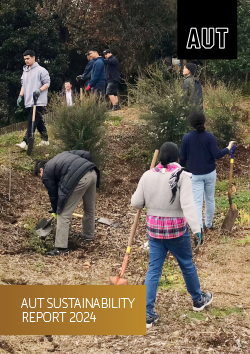
Find out more details about our sustainability targets and initiatives, and see how we’re tracking to meet our goals.
Contact us
Have questions or want to get involved? Contact the sustainability team: sustainability@aut.ac.nz